
Bookmark this page for quick reference
A standard winterizing a home checklist covers the specific tasks that protect a house from cold-weather damage before temperatures drop below freezing.
This list specifically organizes those tasks by system, so nothing gets missed between now and the first hard freeze.
What This List Is For:
This list is used once at the start of the winter season, before the first sustained freeze, to confirm that plumbing, heating, and exterior systems are ready for cold weather.
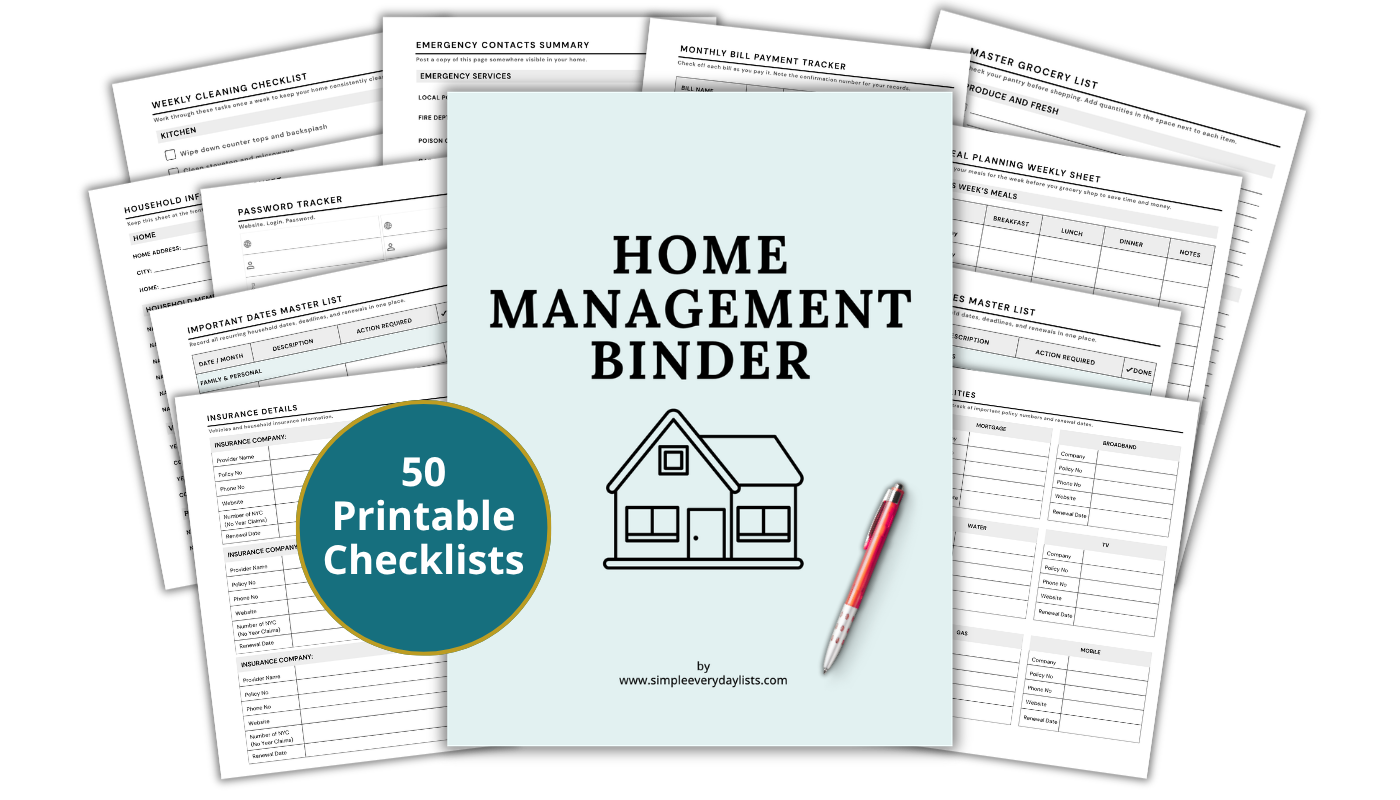
📄 Looking for more lists like this one? The Home Management Binder is a ready-to-print system covering every area of your home in one organized place.
It fits into the broader seasonal planning system covered on this site, which organizes recurring home tasks by time of year – see the seasonal home management checklist for the full seasonal breakdown.
Below are the details typically included on this type of list.
Tasks to Include in a Winterizing a Home Checklist
Winterizing a home checklist covers exterior maintenance, plumbing protection, heating system checks, and draft sealing so a house is ready for sustained freezing temperatures.
This post breaks those tasks into five groups:
- Exterior and structural work
- Plumbing
- Heating
- Windows & insulation
- Winter supplies
Each section lists the specific items to check off before cold weather sets in.
Exterior and Structural Tasks
Exterior tasks address the parts of the house most exposed to freezing temperatures, snow load, and ice. These are usually completed first, since several depend on dry, above-freezing conditions to finish properly.
- Clean gutters and downspouts to prevent ice dams
- Inspect the roof for damaged or missing shingles
- Trim tree branches near the roofline
- Check exterior caulking around siding and trim
- Store or cover outdoor furniture and grills
- Disconnect and drain garden hoses
Most of these tasks take a single afternoon and only need to happen once per season, provided the exterior was in good repair the previous year.
Plumbing and Water System Tasks
Plumbing tasks prevent frozen and burst pipes, which are one of the most common and costly winter home repairs.
This section covers both interior plumbing and any exterior water lines.
- Shut off and drain exterior faucets (hose bibs)
- Insulate exposed pipes in unheated areas like garages or crawl spaces
- Locate and test the main water shut-off valve
- Drain and shut down irrigation systems, if applicable
- Flush the water heater to remove sediment buildup
- Check under sinks for pipes near exterior walls that may need insulation
If a home has an irrigation system, the blowout step should be scheduled with enough lead time before the first freeze, since many services book up in late fall.
Heating System Tasks
Heating system tasks confirm the furnace, boiler, or heat pump is functioning correctly before it becomes essential.
Skipping this step is one of the more common reasons for mid-winter emergency repairs.
Want a Ready-Made Version?
The Home Management Binder is a 50-page printable system covering every area of your household — bills, contacts, seasonal tasks, and more. Print once, use for years.
Learn more about the binder...- Replace or clean the furnace filter
- Schedule an annual HVAC tune-up or inspection
- Test the thermostat and confirm programmable settings
- Check that all vents and returns are unobstructed
- Locate the breaker or fuse panel and confirm labeling
- Test carbon monoxide detectors near heating equipment
A furnace filter is generally the easiest and cheapest task on this list, but it’s also the one most often forgotten once the weather turns.
Windows, Doors, and Insulation
This section covers the points where heated air escapes and cold air enters, which directly affects both comfort and heating costs.
These tasks are typically completed after the exterior and plumbing steps.
- Apply weatherstripping around exterior doors
- Caulk gaps around window frames
- Add or check attic insulation levels
- Insulate crawl spaces and basement rim joists
- Install storm windows or window insulation film, if used
- Check for drafts around electrical outlets on exterior walls
A simple way to check for drafts is to hold a hand near window and door edges on a windy day; noticeable air movement usually means weatherstripping needs replacing.
Winter Supplies and Emergency Prep
This section covers the household supplies worth confirming before the first winter storm, separate from home system maintenance.
These items are usually checked once and then restocked as needed through the season.
- Snow shovels and ice melt
- Emergency flashlights and batteries
- A basic supply of non-perishable food and water
- Extra blankets in case of power outages
- A car emergency kit, if vehicles are kept outside
- Backup phone chargers or a portable power bank
Households in regions with frequent winter power outages may want to keep this section separate and check it closer to the season’s first major storm.
Ongoing Winter Home Maintenance Tasks
A winter home maintenance checklist covers the recurring tasks that keep heating, plumbing, and exterior systems working properly from the first freeze through the end of winter.
The preparation sections above are completed once, but cold weather continues to affect a house all season. Snow buildup, ice dams, and heavy heating use create new issues that only show up after winter has started, so these tasks are checked on a set schedule rather than once.
Monthly Tasks
Monthly tasks focus on the systems under the most strain during winter. Therefore, setting a fixed date, such as the first weekend of each month, makes these easier to keep up with.
- Check the furnace filter and replace it if it’s visibly dirty
- Test smoke and carbon monoxide detectors
- Check the sump pump, if the home has one, by pouring water into the pit
- Inspect weatherstripping on the most-used exterior doors
- Check pipes in unheated areas for frost, condensation, or leaks
- Restock ice melt and emergency supplies used in the previous month
Homes with pets or young children may need to replace furnace filters more often, since hair and dust build up faster when windows stay closed.
After Snowstorms and Cold Snaps
Storm-triggered tasks address problems caused by heavy snow, ice, and sudden temperature drops. These are completed within a day or two of each major storm or stretch of below-freezing weather.
- Clear snow away from furnace intake, dryer vents, and exhaust vents
- Keep the gas meter and outdoor HVAC unit free of snow and ice
- Check the roofline for ice dams and large icicles
- Use a roof rake to remove heavy snow from lower roof sections, if safe to do so
- Let faucets on exterior walls drip during extreme cold
- Clear snow away from the foundation to reduce meltwater seepage
Blocked exhaust vents are the most urgent item in this group, since snow covering a furnace or water heater vent can cause carbon monoxide to build up indoors.
Practical Notes
Most households run the preparation sections once, in October or early November, before the first hard freeze in their region. Households in colder climates, such as the northern Plains, upper Midwest, and northern New England, often move this up to mid-to-late September.
The preparation sections cover about 30 individual tasks across five areas, and the ongoing section adds 12 recurring checks. Not every household will need every item. Homes without an irrigation system can skip that plumbing step, homes without a sump pump can skip that monthly check, and households that park vehicles in a garage can leave the car emergency kit off the supplies list.
Re-check the exterior and plumbing sections every year regardless of whether anything changed the previous winter, since caulking, weatherstripping, and gutter guards wear down over a single season and won’t necessarily show visible damage until a pipe freezes or a leak appears.
The monthly tasks run from the first sustained freeze until overnight temperatures stay above freezing for two consecutive weeks, which is usually March or April in most of the country.
For the tasks that come before winter preparation, the fall home reset checklist covers the room-by-room work that pairs well with this list.
Closing
A winterizing a home checklist is most useful when it’s run the same way every year, with the preparation tasks completed before cold weather arrives and the ongoing maintenance tasks tracked through to spring.
Keeping both parts on the same page means the full winter routine sits in one place.
If you would like one structured place for all of your household records, the Home Management Binder collects every log, checklist, and record page into a single printable binder you can personalize to your own needs.
Ready to set up the full system?
The Home Management Binder includes 50 formatted, print-ready checklists covering household finances, contacts, seasonal tasks, and everything in between - organized and ready to use.
Learn more about the Home Management Binder