

Bookmark this page for quick reference
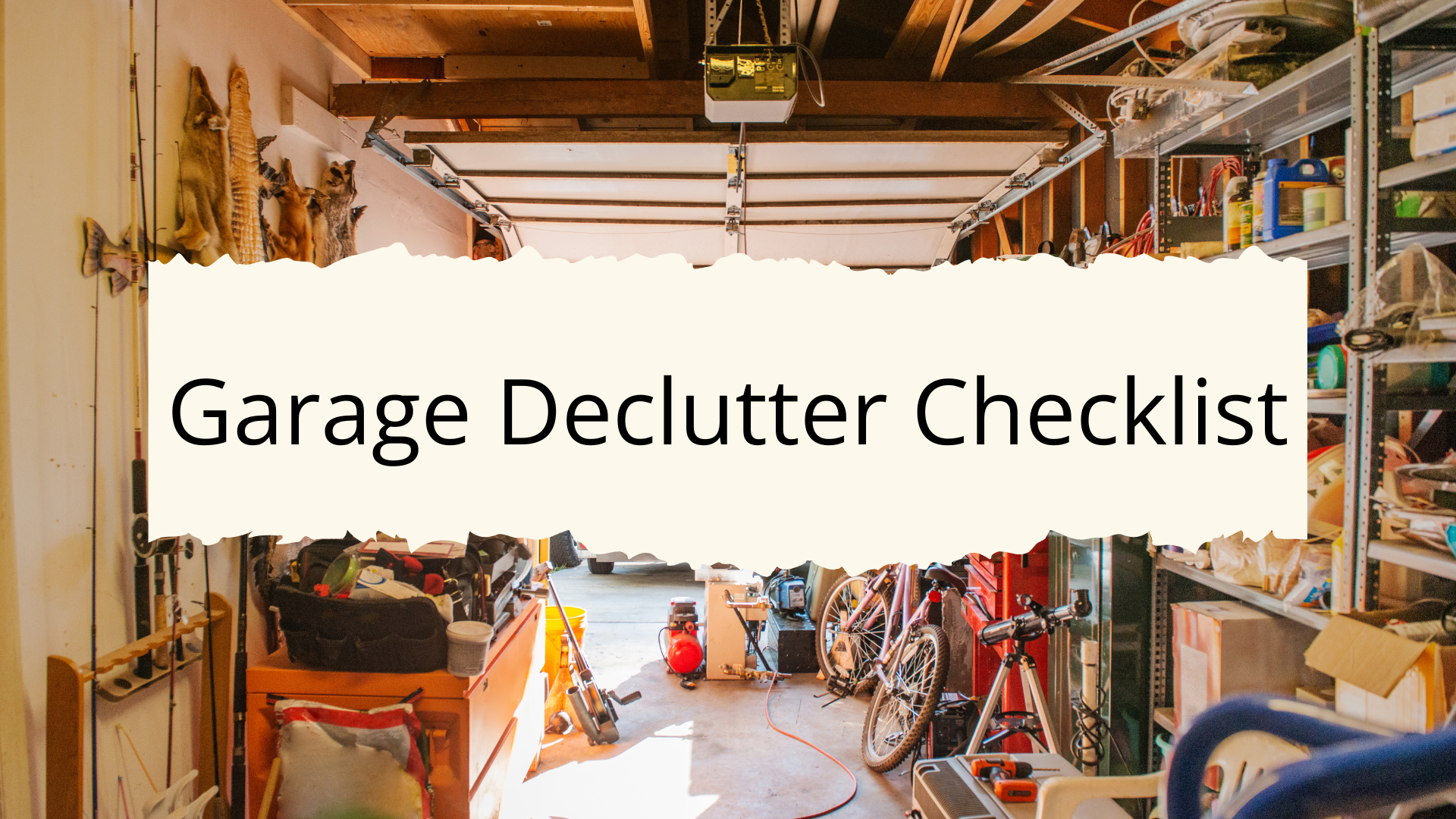
A garage declutter checklist gives you a clear starting point before you try to organize or store anything in the space.
It breaks the process into categories so you’re sorting with a plan instead of moving piles around without direction.
What This List Is For:
This checklist is used before setting up garage storage or shelving, since decluttering first makes any organization system easier to maintain.
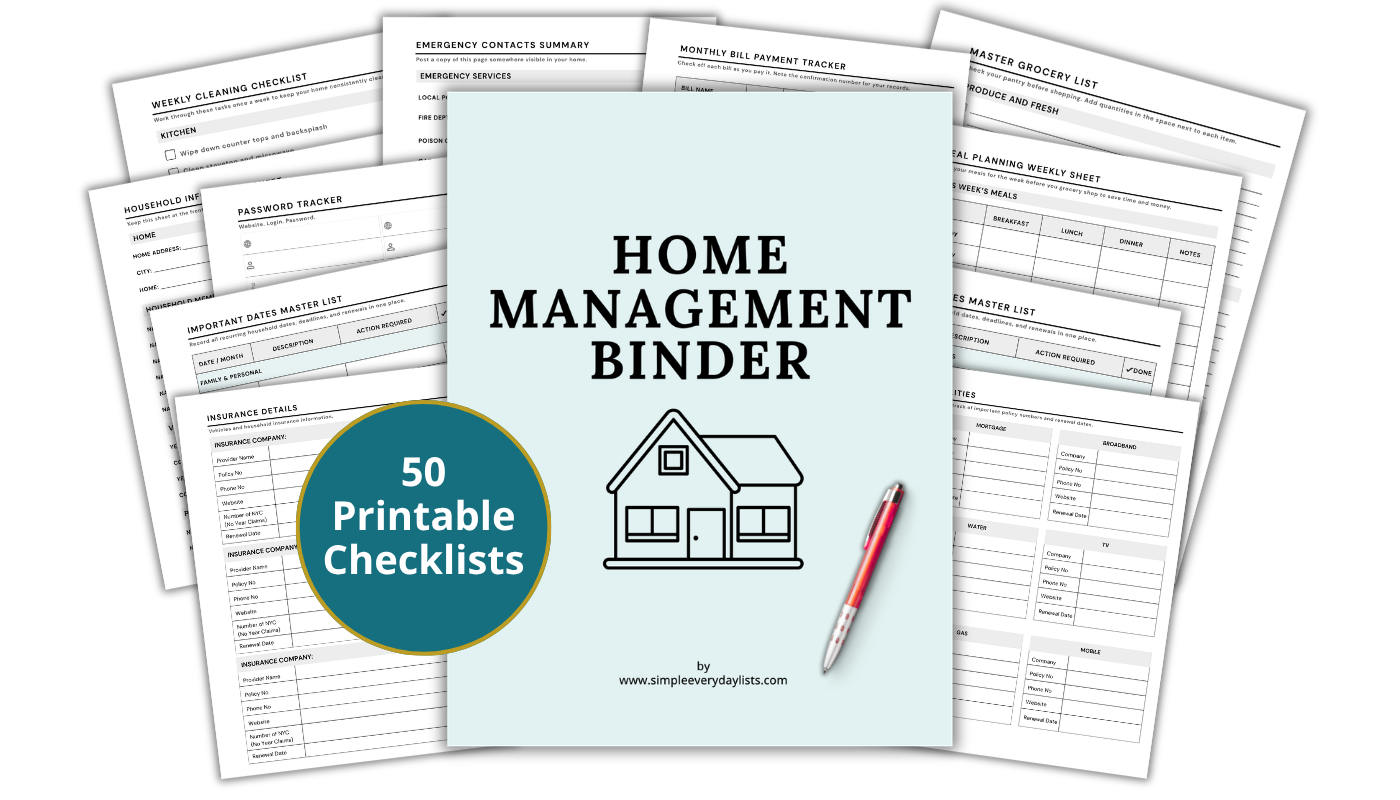
📄 Looking for more lists like this one? The Home Management Binder is a ready-to-print system covering every area of your home in one organized place.
It fits within a broader home organization approach – for the full framework, visit our home organization checklist guide.
Below are the categories and items typically covered in a garage decluttering session.
What to Include in a Garage Declutter Checklist
This section covers the main categories most garages accumulate over time, along with what to look for in each one.
Use it as a working list and go category by category rather than trying to sort the whole space at once.
Tools and Hardware
Tools and loose hardware tend to multiply faster than any other garage category, especially duplicates and items that no longer have a clear use.
Go through toolboxes, pegboards, and drawers as one pass rather than trying to sort by project.
- Duplicate hand tools (multiple hammers, screwdrivers, tape measures)
- Broken or incomplete power tools
- Loose screws, nails, and hardware with no clear source
- Old paint brushes, rollers, and dried-out supplies
- Tools for projects that are complete or no longer planned
Keep one working set of commonly used tools accessible, and store specialty tools separately if they’re used only occasionally.
Chemicals and Hazardous Materials
This category needs a different disposal process than the rest of the garage, since many items can’t go in regular household trash.
Check for expiration dates and container condition as you sort.
- Old paint cans (check if usable or fully dried out)
- Motor oil, antifreeze, and automotive fluids
- Pesticides, fertilizers, and lawn chemicals
- Cleaning products no longer in use
- Propane tanks and fuel containers
Most areas have a household hazardous waste collection program through the city or county, so be sure to check local guidelines before disposal rather than placing these items in curbside trash.
Seasonal and Outdoor Equipment
Seasonal items are easy to overlook because they’re only relevant part of the year, which means outdated or unused equipment can sit for a long time before anyone notices.
Sort by season so it’s clear what’s actually being used.
Want a Ready-Made Version?
The Home Management Binder is a 50-page printable system covering every area of your household — bills, contacts, seasonal tasks, and more. Print once, use for years.
Learn more about the binder...- Holiday decorations that are broken or duplicated
- Camping gear that hasn’t been used in over a year
- Sports equipment kids or family members have outgrown
- Lawn and garden tools that are broken or replaced
- Snow removal equipment that’s damaged or unnecessary
Keep only the equipment currently in rotation, and consider off-season storage bins for anything that stays but isn’t used year-round.
Sports, Recreation, and Kids’ Items
This category often includes items tied to past stages, such as bikes that no longer fit, gear from activities no longer in progress, or toys that migrated to the garage from other parts of the house.
A quick “still in use” test helps clarify what to keep.
- Bikes that are outgrown, broken, or unused
- Sports equipment for activities no longer active
- Ride-on toys and outdoor play equipment
- Pool or water toys that are damaged or unused
- Gear for one-time or seasonal activities only
If an item hasn’t been used in the current season and isn’t planned for the next one, it’s a reasonable candidate to donate or discard.
Storage Containers and Miscellaneous Items
This is typically the catch-all category – empty boxes, packing materials, and general items with no clear home elsewhere in the house.
It’s worth doing this pass last, once the more specific categories are cleared.
- Empty cardboard boxes and packing materials
- Furniture no longer in use
- Random household items relocated to the garage “temporarily”
- Duplicate storage bins or containers
- Items with no clear category or purpose
Anything that’s been in this category for more than a few months without being used or resolved is a strong candidate to remove.
Practical Notes
A garage declutter checklist is typically worked through once or twice a year, often ahead of a seasonal changeover or before setting up new storage.
Whoever manages the garage space is usually the one maintaining the list, though it can be a shared task if more than one household member uses the space regularly.
Some households prefer a full sort in one session, while others break it into category-by-category sessions over a few weekends; either approach works as long as the categories above get covered.
Working through a garage declutter checklist by category makes the process more manageable than trying to sort the entire space at once, and it sets up the garage for whatever storage or shelving system comes next.
If you would like a ready-made system for keeping all of your home records organized, the Home Management Binder brings everything together in one structured, printable binder.
Ready to set up the full system?
The Home Management Binder includes 50 formatted, print-ready checklists covering household finances, contacts, seasonal tasks, and everything in between - organized and ready to use.
Learn more about the Home Management Binder