

Bookmark this page for quick reference
Most people don’t plan their lives a full month ahead, but monthly planning fills a useful middle space between weekly and long-term planning.
It’s less detailed than weekly planning, but more intentional than day-to-day lists.
What This List Is For:
In practice, it’s usually a small set of repeatable lists you revisit once a month, adjust as needed, and then move on.
📄 Printable versions of these lists are available here.
These are the lists that help you zoom out, reset systems, and make sure nothing quietly slips through the cracks.
A monthly planning routine doesn’t need to be complicated, just organized.
The goal is not to plan every detail; it’s to offload thinking, review what matters, and set up the month so weekly planning feels easier.
Below is a practical collection of 14 monthly planning lists, what each one is for, and how they’re commonly used.
You choose which ones are the best for you. You don’t need to use all 14.
What Monthly Planning Lists Are For
Monthly planning lists are used to:
- Review recurring responsibilities
- Track ongoing projects at a higher level
- Prepare for known events and deadlines
- Reset household, admin, and personal systems
- Support weekly planning without replacing it
Most people use these lists once at the start of the month, and sometimes again mid-month for a quick check-in.
But either way, they work best when kept simple and consistent.
14 Core Monthly Planning Lists
These are the foundational lists most monthly planning systems include.
1. Monthly Overview List
This is the anchor list for the month.
It usually includes:
- Key dates and deadlines
- Appointments and events
- Travel, visitors, or schedule changes
- Non-negotiable commitments
This list gives you a snapshot of what the month already contains before you add anything new.
Want a Ready-Made Version?
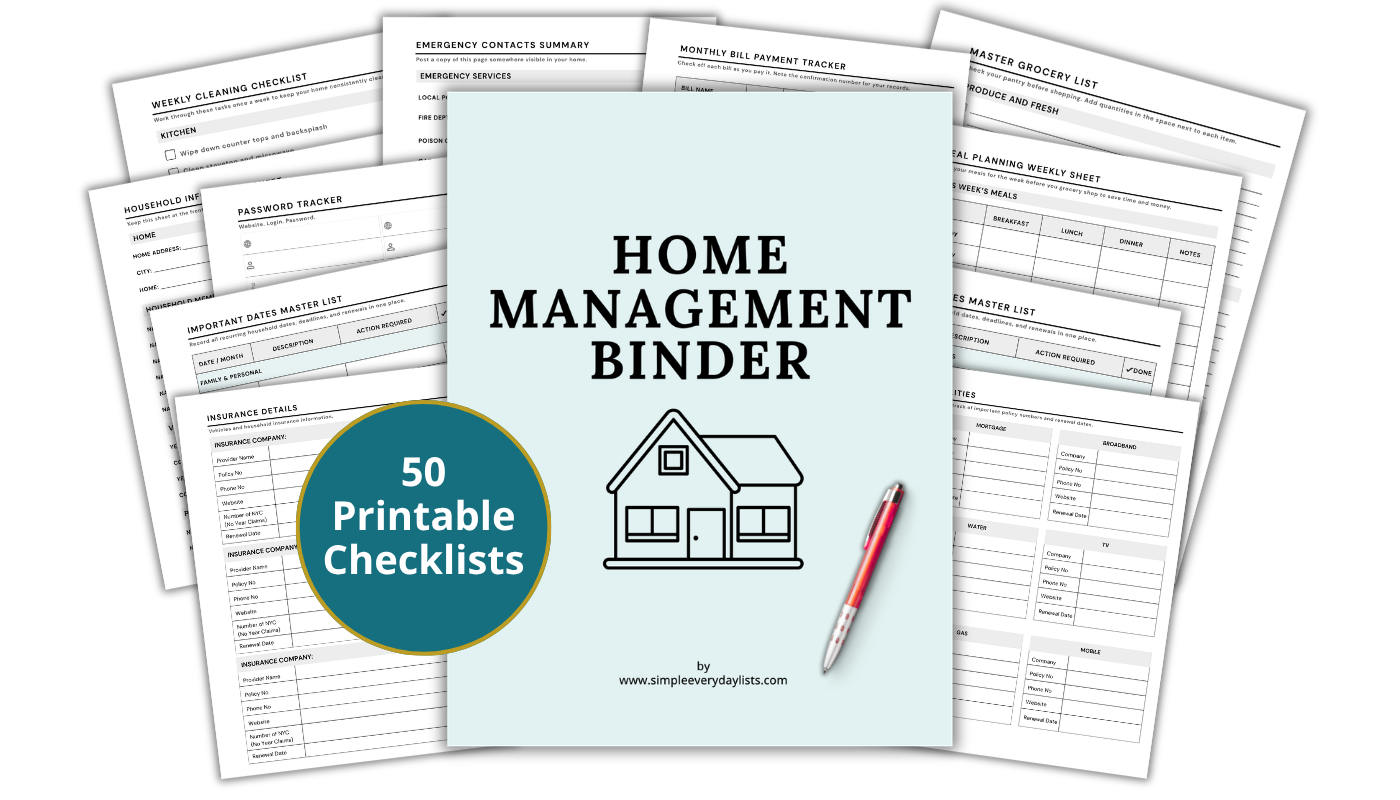
The Home Management Binder is a 50-page printable system covering every area of your household — bills, contacts, seasonal tasks, and more. Print once, use for years.
Learn more about the binder...2. Monthly Goals & Priorities List
This list captures what you want to focus on this month, not everything, just the main priorities.
Common categories:
- Work or business priorities
- Household focus areas
- Personal admin or maintenance tasks
- Seasonal or time-sensitive items
Many people limit this list to 3–5 main priorities to keep it usable.
3. Monthly To-Do List
This is where tasks live that need doing this month but don’t belong to a specific week yet.
Examples:
- Admin tasks
- Phone calls or appointments to book
- Maintenance or repairs
- Tasks dependent on timing or availability
This list feeds into weekly planning as the month progresses.
4. Monthly Bills & Finance Checklist
A simple checklist to track predictable monthly financial tasks.
This might include:
- Bills to pay
- Subscriptions to review
- Transfers or savings contributions
- Invoices to send or follow up
Even when payments are automated, many people still like a monthly checklist for visibility.
5. Monthly Appointments & Health List
This list tracks health-related planning at a monthly level.
Often includes:
- Appointments to attend
- Prescriptions to refill
- Health admin tasks
- Follow-ups to schedule
This list prevents these tasks from becoming last-minute or reactive.
Household & Home Monthly Lists
These lists support home management and routine upkeep.
6. Monthly Home Maintenance List
Used to track small, recurring home tasks that don’t need weekly attention.
Examples:
- Replacing filters
- Seasonal checks
- Cleaning or maintenance reminders
- Booking trades or services
Many people keep this list short and rotate tasks month by month.
7. Monthly Cleaning Focus List
This list complements daily or weekly cleaning routines.
It typically includes:
- deep-clean tasks
- rotation areas (cupboards, appliances, storage)
- seasonal cleaning jobs
Not everything needs doing every month, so this list helps spread tasks out.
8. Monthly Meal & Food Planning List
This is a higher-level food planning list.
It may include:
- Meal themes or rotations
- Freezer inventory notes
- Bulk cooking plans
- Upcoming events that affect meals
This list supports weekly meal planning without duplicating it.
Work, Projects & Life Admin Lists
These lists help manage ongoing responsibilities that don’t reset weekly.
9. Monthly Projects Review List
A simple review list for projects already in progress.
Often includes:
- Current status of each project
- Next logical step
- Tasks to schedule into weekly plans
This list prevents projects from stalling due to a lack of visibility.
10. Monthly Admin & Paperwork List
Used to track life admin tasks that tend to accumulate.
Examples:
- Forms to complete
- Documents to file
- Emails or messages to follow up
- Accounts to review
Keeping these tasks on a monthly list stops them from clogging weekly to-do lists.
11. Monthly Digital Reset List
A practical list for basic digital maintenance.
Common items:
- Email clean-up
- File organisation
- Photo or document backups
- Unsubscribing or deleting unused apps
This list is often optional, but helpful for keeping systems tidy.
Review & Reset Lists
These lists close out the month and prepare for the next one.
12. Monthly Review List
This list is factual, not reflective.
It might include:
- Tasks completed
- Tasks deferred
- Deadlines missed or moved
- Systems that worked or didn’t
The purpose is to capture information, not analyse it deeply.
13. Monthly Carry-Forward List
This list transfers unfinished items into the next month.
It usually includes:
- Tasks still relevant
- Projects continuing next month
- Deferred admin or maintenance tasks
This prevents important items from being forgotten during the reset.
14. Next Month Setup List
This list bridges monthly and weekly planning.
Often includes:
- Known appointments
- Upcoming deadlines
- Prep tasks for early next month
- Items to add to the next Monthly Overview
This list makes starting the new month quicker and calmer.
How Monthly Planning Lists Are Typically Used
Most people keep monthly planning lists:
- In a notebook or planner
- In a digital notes app
- Inside a household binder
- As printable checklists
And they’re usually reviewed:
- Once at the start of the month
- Once mid-month if needed
- Once at the end of the month to reset
Monthly planning works best when the lists stay stable and repeatable.
Closing Note
Monthly planning doesn’t need a complex system.
A small set of consistent lists is usually enough to keep everything visible and moving.
If your weekly planning feels scattered, monthly planning lists often provide the missing structure, not by adding more detail, but by giving everything a place to land.
Ready to set up the full system?
The Home Management Binder includes 50 formatted, print-ready checklists covering household finances, contacts, seasonal tasks, and everything in between - organized and ready to use.
Learn more about the Home Management Binder