
Bookmark this page for quick reference
Most kids need more than a few new pieces at the start of the school year, but it’s easy to over-buy or miss something obvious without a list in front of you.
A clothing checklist keeps the shopping process organized, especially when you’re buying across multiple categories – tops, bottoms, shoes, outerwear, and extras – in one or two trips.
What This List Is For:
This checklist covers the clothing and footwear most school-age kids need at the start of each school year. It’s meant to be used before back-to-school shopping begins, ideally after a quick closet review to identify what still fits and what needs replacing.
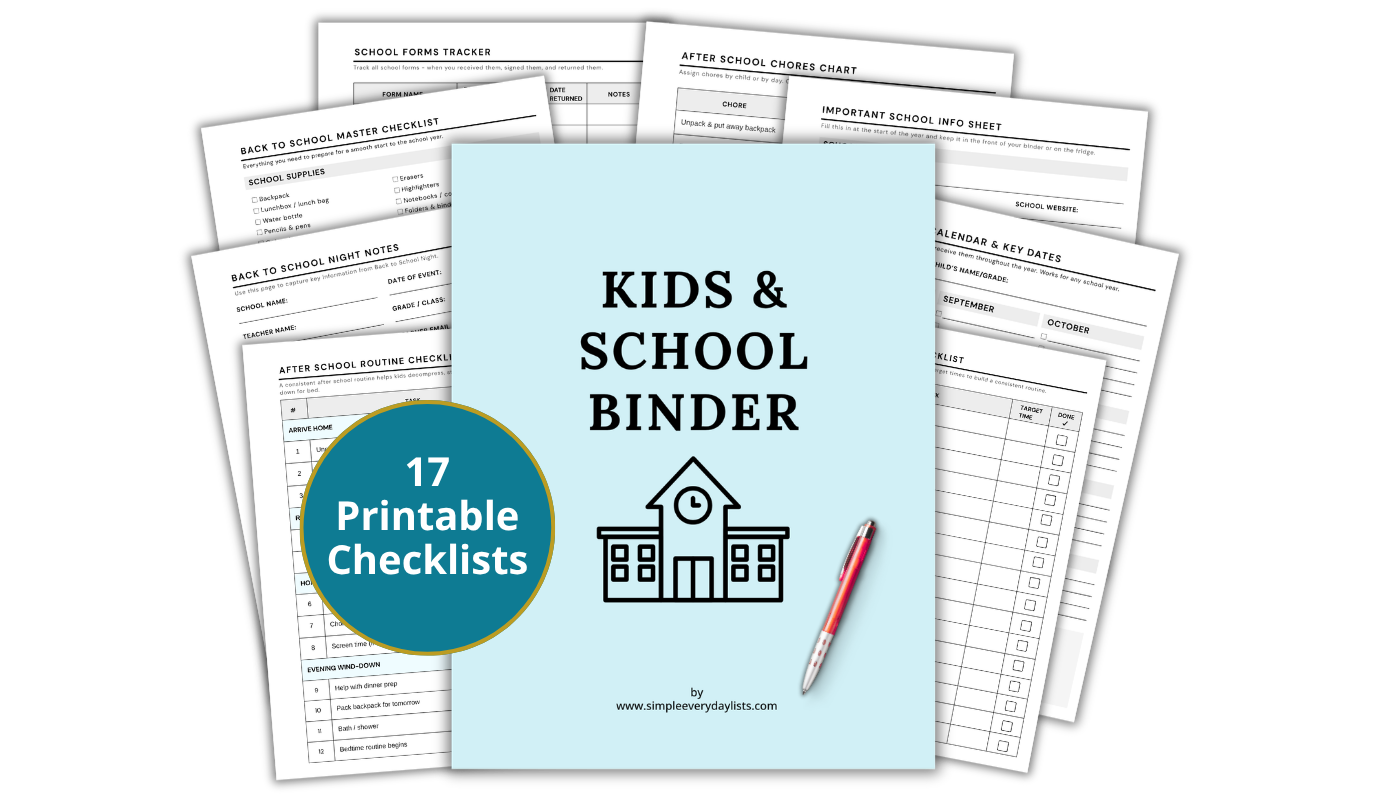
📄 A formatted, print-ready version of this list is included in the Kids & School Binder.
Keeping school-related lists in one place makes it easier to find what you need and reuse the same checklists each year without starting from scratch.
This includes preparation lists, routine trackers, forms checklists, and event lists that come around on a predictable schedule. For a full overview of what’s covered, visit our school checklists for parents guide.
Below are the clothing categories and quantities most families work from each year.
Back to School Clothing Checklist by Category
Tops
Tops are usually the highest-volume category.
Plan for enough to cover a full school week plus one or two extras to allow for laundry cycles without running short mid-week.
- 5–7 short-sleeve t-shirts or casual tops
- 3–5 long-sleeve shirts or layering tops
- 1–2 nicer tops for picture day, school events, or presentations
- 2–3 sweatshirts or lightweight hoodies (not outerwear weight)
- Polo shirts or collared shirts, if required by dress code
Bottoms
Bottoms tend to wear out faster than tops, especially pants and jeans with active kids.
Check seams, knees, and waistbands on last year’s pieces before deciding what to replace.
- 4–6 pairs of pants or jeans
- 2–4 pairs of shorts, if the school climate calls for it in early fall
- 2–3 leggings or joggers, if allowed by dress code
- 1–2 skirts or dresses, if applicable
- 1 pair of athletic or gym shorts for PE
Shoes and Footwear
Shoes are often the most expensive category and the one most affected by summer growth.
Try on last year’s shoes before assuming they still fit.
- 1 pair of everyday sneakers for school
- 1 pair of athletic shoes for PE, if the school requires dedicated gym shoes
- 1 pair of casual shoes or sandals for warmer weather (if relevant at the start of the school year)
- Rain boots, if the region calls for them
- Dress shoes or boots, for events, holidays, or colder months
Outerwear
Outerwear needs vary significantly by region. In warmer states, a lightweight jacket may be sufficient for the first semester.
Want a Ready-Made Version?
The Kids & School Binder consists of 17 checklists and trackers to help you plan, manage and organize the whole school year.
Learn more about the binder...In colder climates, plan for both transitional and winter-weight outerwear.
- 1 lightweight jacket or zip-up for early fall
- 1 winter coat, if applicable
- 1 rain jacket, if needed
- Hat, gloves, and scarf or neck warmer for colder climates
Basics and Underclothes
These are easy to undercount. Running low on socks or underwear mid-week creates unnecessary friction in morning routines.
- 7–10 pairs of underwear
- 7–10 pairs of socks (including athletic socks if needed for PE)
- 2–3 undershirts or tanks, if worn as a base layer
- Sports bra or bralette, if applicable
Gym and Activity Clothes
Some schools require specific PE uniforms or have dress code restrictions on athletic wear during regular school hours.
Check school requirements before buying.
- 2–3 sets of athletic shorts and shirts, or full PE uniform if required
- Athletic socks for gym use
- Any team or club clothing required by specific after-school activities
Dress Code and Uniform Items
If the school has a dress code or uniform policy, the standard categories above may not apply in full.
Use the school’s published list as the primary guide and supplement with any extras not covered – typically casual wear for off-campus events, field trips, or spirit days.
- School-issued or approved uniform tops (in required colors or styles)
- Uniform pants, skirts, or shorts
- Approved outerwear, if specified
- Any embroidered or branded items that the school requires to be purchased through a specific vendor
How to Use This Checklist Before You Shop
Start with a closet review, not a shopping list.
Pull out everything from last year, check sizing, and note what’s worn out or no longer fits. Many families find they only need to replace 30–50% of a child’s wardrobe each year rather than starting from scratch.
Once you have a clear picture of what’s missing, sort your list by category before heading to the store or opening a browser tab. Buying across categories in one trip, rather than returning multiple times, saves time and makes it easier to stay within budget.
A few practical notes worth keeping in mind:
- Build in a size buffer for fast-growing kids, but avoid over-buying in a single size
- Check the school’s current dress code before buying – policies sometimes change year to year
- Label all clothing items, especially outerwear, hats, and gym clothes that are likely to be left somewhere
- Hold off on buying specialty items (team uniforms, club shirts) until activity enrollment is confirmed
Updating This Checklist Each Year
This list can be reused as a starting framework each year. The quantities above are general guidelines, so adjust based on your child’s age, school policies, your local climate, and how often laundry gets done in your household.
Keep a copy from year to year and note any adjustments at the bottom. Over time, you’ll develop a version calibrated to your child’s specific needs that takes very little time to work through.
At the start of each school year, the closet review stage takes the most time. Once that’s done, the checklist itself moves quickly.
A back-to-school clothing checklist reduces the likelihood of arriving at September 1st without gym clothes, missing a pair of dress shoes for picture day, or realizing the winter coat from last year no longer fits once the cold arrives.
If you’d prefer a ready-made version, the printable Kids and School Binder includes a formatted version of this page, organized and ready to print.
Ready to set up the full system?
The Kids & School Binder includes 17 formatted, print-ready checklists covering the whole of the school year - organized and ready to use.
Learn more about the Kids & School Binder