
Bookmark this page for quick reference
Most households with a home warranty have the original contract buried in a drawer or saved in an email that no one can find quickly.
A single reference sheet in your household binder puts all the key details in one place – provider contact, coverage summary, service fees, and claim instructions – without digging through paperwork every time something breaks.
What This List Is For:
This page is a reference sheet for your current home warranty plan. It captures the key details you’d need to locate quickly when a covered system or appliance fails, without hunting down the original contract each time.
📄 Looking for more lists like this one? The Home Management Binder is a ready-to-print system covering every area of your home in one organized place.
Many households keep this sheet in the Home Maintenance Section of their home management binder so the most important details are easy to find when needed.
What Is A Household Binder?
A household binder is a single reference point for the lists and information you use repeatedly to manage your home. For a full overview of how the system works, visit our household binder guide.
Below are the details typically recorded on a home warranty information sheet.
Information to Include on a Home Warranty Information Sheet
Provider and Policy Details
Start with the basics, who the warranty is with, and how to reach them.
This section gets referenced most often when something goes wrong, and you need to call or file a claim quickly.
- Warranty company name
- Policy or contract number
- Coverage start date and expiration date
- Website and customer service phone number
- Online account login (username/password reference or note to check password manager)
- Whether the policy auto-renews and the renewal date
The provider phone number and policy number are the two fields you’ll reach for first in any service situation, so make sure they’re current.
If your plan auto-renews, note the renewal date here so you can review coverage terms before the charge posts.
Coverage Summary
Home warranty plans vary considerably in what they include.
Recording a plain-language summary of your coverage avoids misreading the contract when you’re under pressure.
- Systems covered (e.g., HVAC, plumbing, electrical, water heater)
- Appliances covered (e.g., refrigerator, dishwasher, washer/dryer, oven)
- Any add-on coverage purchased (e.g., pool, well pump, roof leak)
- Items specifically excluded under your plan
- Coverage cap amounts per item or per year, if listed in your contract
- Whether the plan covers repair only or repair and replacement
The exclusions and coverage caps are the fields most homeowners overlook until a claim is denied.
Writing those out in plain language here, rather than leaving them buried in the contract, prevents surprises when you actually need the coverage.
Service Call and Claims Process
Knowing the claims process before you need it saves time when a covered item fails.
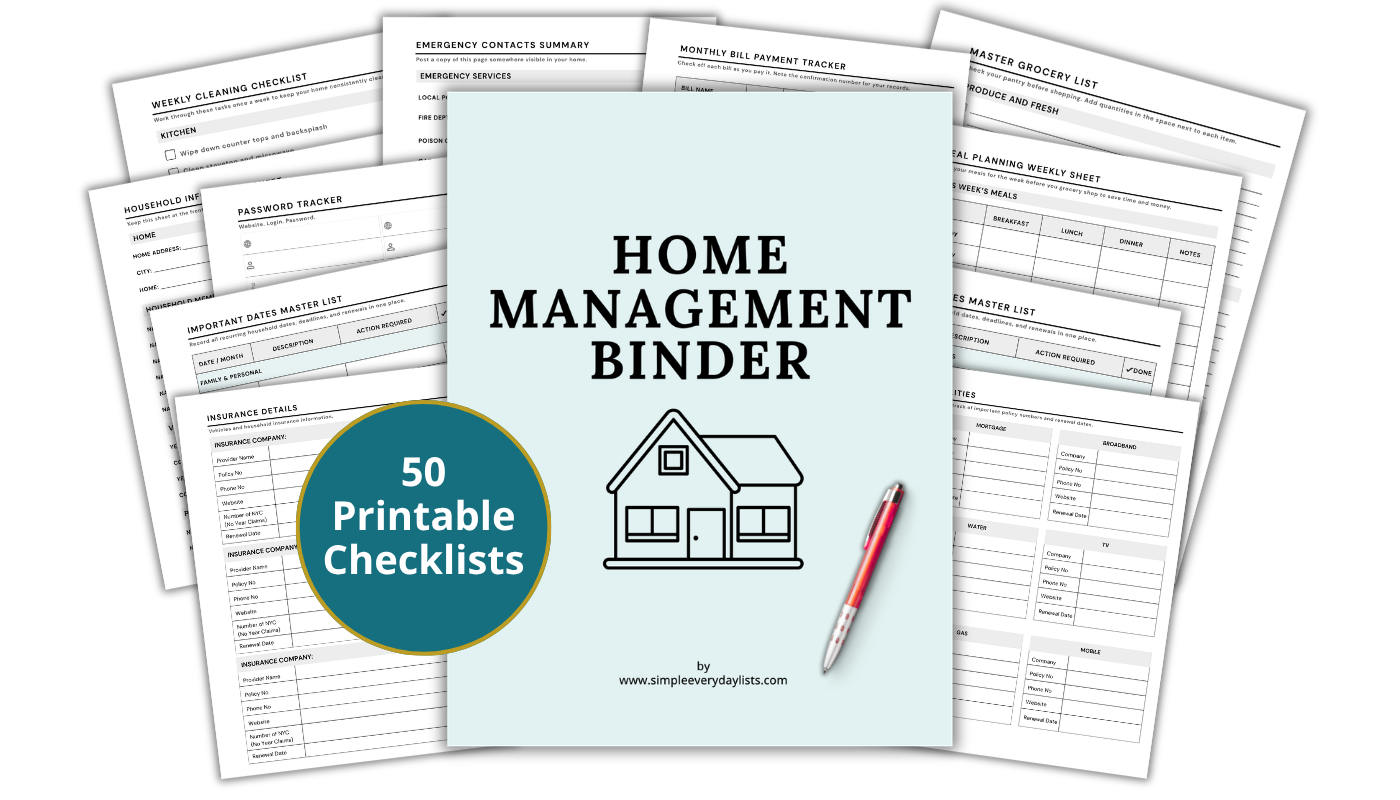
Want a Ready-Made Version?
The Home Management Binder is a 50-page printable system covering every area of your household — bills, contacts, seasonal tasks, and more. Print once, use for years.
Learn more about the binder...This section is the one you’ll reference in the moment.
- Service call fee (also called a trade call fee or deductible per visit)
- How to submit a claim – online portal, phone, or app
- Whether you can choose your own contractor or must use approved providers
- Typical response time noted in your contract
- Emergency service availability and contact method
- Steps required before a technician visit (e.g., submitting a claim online first)
Some plans require you to submit a claim through the online portal before a technician can be dispatched, even in urgent situations. Noting that step here means you won’t lose time figuring out the process when something fails on a weekend or holiday.
Claim History
A running log of warranty claims helps you track patterns in appliance or system performance over time. It also serves as a record if a dispute arises with the provider.
- Date of each claim
- System or appliance involved
- Technician name and company
- Outcome (repaired, replaced, denied)
- Service call fee paid
- Notes on any follow-up required
If the same system generates multiple claims within a short period, that pattern is worth knowing; both for your own planning and for any conversation with the warranty provider about repair versus replacement.
A simple log makes that information easy to pull without relying on memory or digging through old emails.
Contract and Renewal Notes
This section captures the administrative details that matter at renewal time or if you decide to switch providers.
- Annual premium and billing method (monthly or annual)
- Date premium is charged
- Cancellation policy and refund terms
- Provider’s rating or any renewal decision notes
Renewal is also a good time to compare your current plan against other providers – particularly if your service experience over the past year has been inconsistent.
Keeping your cancellation terms and renewal date in one place makes that evaluation easier to act on before the plan rolls over automatically.
Practical Notes
This reference sheet is typically updated once a year, at renewal time, or immediately after filing a claim.
The coverage summary and service call fee are the fields most likely to change year to year, so those are worth reviewing even if you don’t update anything else. If your plan changes mid-year due to a provider update, note the date and what changed.
Most households keep one sheet per active warranty.
If you have a builder’s warranty on a newer home in addition to a home warranty plan, those belong on separate sheets – the coverage, contacts, and claim processes are different.
Some households also maintain a separate sheet for appliance manufacturer warranties, which is a distinct category from a home warranty plan.
The information on this sheet is a summary reference, not a replacement for your full contract. Keep the original contract filed nearby or note where the digital copy is stored.
Summary
This reference sheet works alongside other home records in your binder.
The warranty information lives here; individual appliance details, purchase dates, and manufacturer warranty terms can be tracked on a dedicated appliance warranty tracker.
The warranty information lives here; individual appliance details, including model numbers and purchase dates, can be tracked on a separate home appliance inventory sheet.
If you would like a ready-made system for keeping all of your home records organized, the Home Management Binder brings everything together in one structured, printable binder.
Ready to set up the full system?
The Home Management Binder includes 50 formatted, print-ready checklists covering household finances, contacts, seasonal tasks, and everything in between - organized and ready to use.
Learn more about the Home Management Binder