
Bookmark this page for quick reference
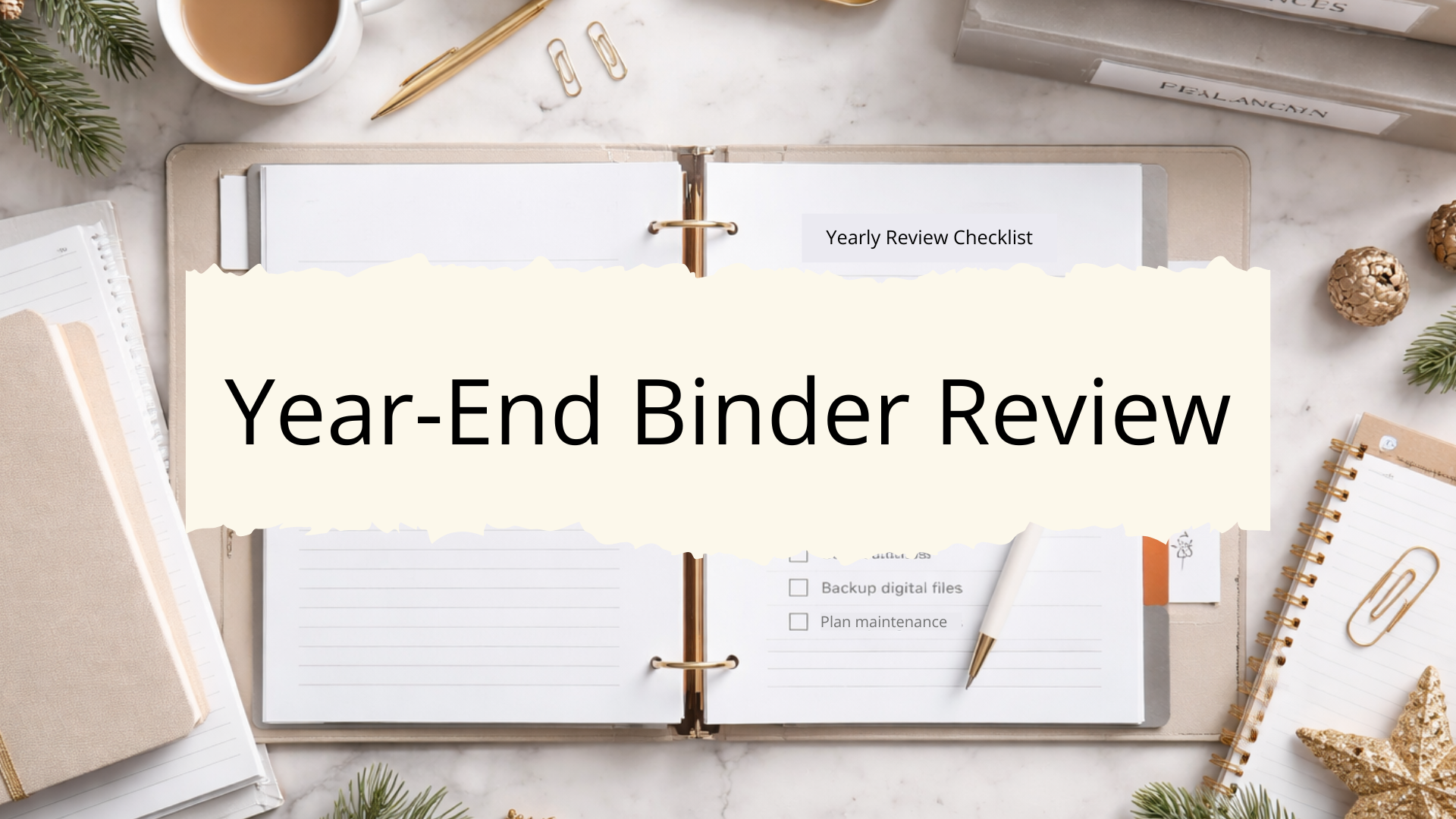
A year-end binder review provides a clear point in the calendar to reset your records and prepare the binder for the year ahead.
So rather than updating individual pages throughout the year, this process focuses on reviewing the entire system once annually.
Many households complete this review in December or early January when preparing for a new calendar year, but the exact timing is flexible.
The main goal is to ensure that the binder remains a reliable reference for household information rather than an archive of outdated documents.
What This List Is For
This checklist helps guide a full year-end review of your home management binder.
The review focuses on confirming that the information stored inside the binder is still accurate and removing documents that are no longer relevant.
Over the course of a year, new records are added, and small changes accumulate, which can gradually make sections harder to navigate.
Completing an annual review helps ensure that:
• Outdated documents are removed
• Household contact lists stay accurate
• Insurance and financial reference pages are current
• Home records reflect recent changes
• New planning pages are ready for the upcoming year
The process is typically straightforward and can often be completed in a single sitting once the checklist is in place.
1. Remove Outdated Documents
The first step in a year-end review is removing documents that are no longer needed in the binder.
Over time, expired policies, outdated information sheets, and replaced records can accumulate.
Starting with a simple review of each section helps clear unnecessary paperwork before updating the remaining pages.
Look for documents such as:
- Expired insurance documents
- Outdated appliance manuals
- Old warranties that have ended
- Replaced appliance records
- Cancelled service provider contracts
- Old medical information sheets
- Expired identification copies
- Obsolete school or childcare information
- Old seasonal planning sheets
If certain documents still need to be retained for historical reference, they can be moved to an archive folder or document box.
The active binder should ideally contain only the records that are still useful for current household management.
Removing outdated paperwork first also makes it easier to see which sections need updating.
2. Update Household Contact Information
Many households store important contact lists in their binder, including medical providers, schools, and service companies.
These details can change over time, so reviewing them once per year helps prevent outdated numbers from remaining in the system.
Start by checking each contact list to confirm that the information is still correct.
Common lists to review include:
- Emergency contact lists
- Family contact details
- Doctor and medical office numbers
- School contacts
- Childcare provider details
- Pet veterinarian information
- Insurance company contact numbers
- Utility provider phone numbers
- Home service provider contacts
If several updates are required, replacing the entire page can sometimes be easier than editing individual entries.
Clear, updated lists help ensure that important contact information is always easy to locate.
3. Review Insurance Information
Insurance policies are often renewed annually, which makes year-end an ideal time to review the documents stored in the binder.
Confirm that the binder includes the most recent versions of policy summaries or reference pages.
Review the following records if they are part of your binder:
- Home insurance
- Car insurance
- Health insurance
- Pet insurance (if applicable)
- Life insurance policies
Older policy documents can usually be removed once the new version has been added.
Some households also keep a simple summary page listing policy numbers, renewal dates, and claim phone numbers so that this information can be located quickly when needed.
Keeping insurance records updated ensures the binder remains a reliable reference point for household coverage information.
4. Update Financial Reference Pages
Many home management binders include a section that stores general household financial reference information.
This section usually contains account reference lists rather than detailed financial records.
During the year-end review, check that the information on these pages still reflects the household’s current setup.
Pages to review may include:
- Bank account reference lists
- Mortgage or rent information
- Loan records
- Household bill provider lists
- Subscription and service records
- Emergency fund tracking pages
If the pages have become crowded with edits throughout the year, replacing them with clean updated versions can help maintain readability.
The goal of this section is not detailed budgeting but maintaining an organized overview of important financial references connected to the household.
5. Check Home Inventory Records
Home inventory lists often change gradually as appliances are replaced, electronics are upgraded, or new items are purchased.
Because these changes happen over time, the records may no longer match the current contents of the home.
A quick year-end review helps ensure these lists remain accurate.
Check items such as:
- Major appliances
- Electronics
- High-value household items
- Furniture records
- Serial number logs
- Warranty tracking pages
If items were replaced or removed during the year, update the records to reflect those changes.
Keeping these lists current can be helpful when locating manuals, checking warranties, or referencing serial numbers.
6. Review Home Maintenance Records
If your binder includes a home maintenance section, this is a useful time to check that service records and maintenance notes are still organized clearly.
Throughout the year, maintenance tasks may be added or updated, which can leave the pages slightly disorganized.
Review records such as:
- HVAC service records
- Appliance maintenance logs
- Home repair notes
- Contractor contact details
- Warranty service history
You may also want to confirm that any recurring maintenance schedules still match the needs of the home.
For example, certain tasks may have been added or adjusted based on repairs completed during the year.
A short review helps ensure that this section continues to function as a practical record of home maintenance activity.
7. Replace Yearly Planning Pages
Some binder systems include planning pages that reset every year. These sheets are designed for tracking upcoming household tasks and responsibilities for the next calendar year.
Preparing these pages ahead of time keeps the binder ready for continued use.
Examples include:
- Yearly home maintenance planners
- Annual budget worksheets
- Yearly bill trackers
- School year information sheets
- Seasonal preparation checklists
Replacing these pages during the year-end review prevents outdated planning sheets from carrying forward into the new year.
8. Refresh Emergency Information Pages
Emergency reference pages should always remain easy to locate and fully up to date.
Because this information may be needed quickly, accuracy is especially important.
Take a moment to review the details on each emergency reference page.
Common pages include:
- Emergency contact lists
- Medical information summaries
- Medication lists
- Household member identification copies
- Pet emergency information
Replace or update any page that contains outdated contact details, medications, or provider information. Maintaining accurate emergency information helps ensure the binder can serve as a dependable household reference if needed.
9. Check Binder Organization
The final step in the year-end review is checking the overall structure of the binder.
Over time, pages can become misfiled, dividers may shift, and some sections may grow larger than expected.
A quick organizational check helps keep the binder easy to navigate.
Look for the following:
- Sections are clearly labeled
- Dividers remain intact
- Pages are easy to locate
- Frequently used information is placed toward the front
- The binder is not overfilled
If the binder has become crowded, it may help to archive older documents or move less frequently used sections into a secondary binder.
A short review of the structure ensures the system continues to work efficiently.
Closing
A year-end binder review keeps household records clear, organized, and accurate.
Completing this checklist once per year helps remove outdated paperwork and ensures that important information is ready for the months ahead.
With a short annual update, your home management binder remains a reliable reference system for household information throughout the year.