
Bookmark this page for quick reference
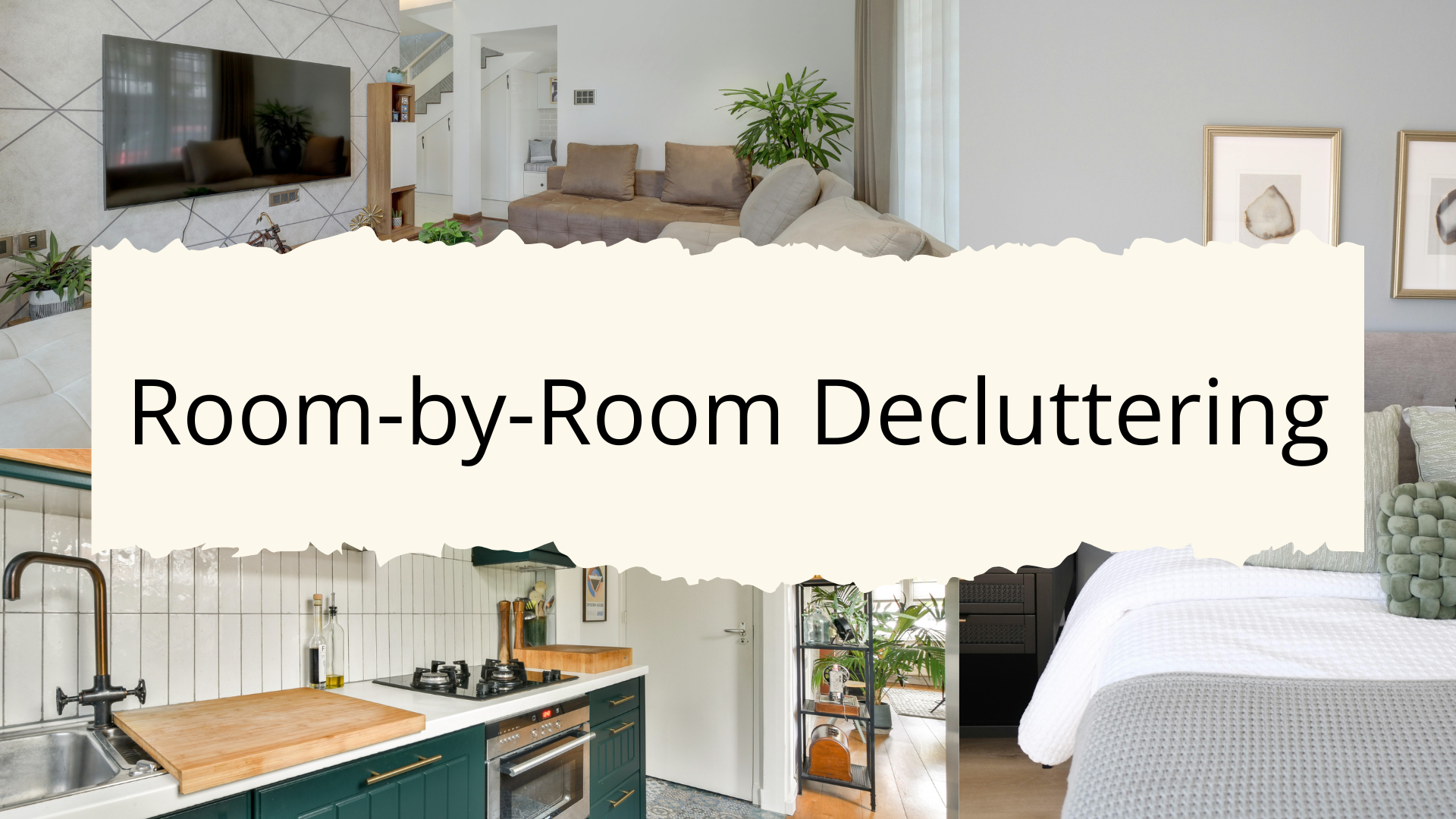
If you’re trying to declutter but keep getting stuck thinking about the whole house at once, working room by room makes the process much simpler.
Breaking decluttering down by individual spaces keeps decisions contained and practical.
What This List Is For:
This list is designed to provide room-by-room decluttering prompts that help identify common clutter and simplify decision-making without needing a full-house plan.
📄 You can find related home organization printable lists here.
Instead of everything competing for attention, you focus on one room, one category of items, and one set of decisions at a time.
So with this in mind, this post is set up as a collection of decluttering lists for each room in the house.
Each list acts as a prompt rather than a rulebook, helping you quickly spot common clutter and make straightforward keep, donate, recycle, or discard decisions.
You can work through the lists in one go or return to them room by room over time, depending on what fits your schedule.
They’re also easy to print or add to a household binder if you keep one.
How to Use These Decluttering Lists
Each room list focuses on items that commonly build up without being noticed.
The goal is not to empty a room completely, but to remove items that no longer serve that space.
A simple approach:
- Start with one room
- Read through the list
- Pull out anything that applies
- Decide what stays and what goes
No timers, no sorting systems required, just practical prompts.
Decluttering List: Entryway & Hallways
These areas collect items in transit, which means clutter tends to linger.
- Shoes that are rarely worn
- Coats and jackets out of season
- Old scarves, gloves, and hats
- Bags you don’t use anymore
- Mail that hasn’t been opened
- Loose keys with no known purpose
- Broken umbrellas
- Items placed “temporarily” and never moved
Clearing this area usually makes day-to-day coming and going feel more straightforward.
Decluttering List: Living Room
Living rooms often hold a mix of storage, entertainment, and overflow from other areas.
- Decorative items you no longer like
- Extra throw pillows or blankets
- Magazines and old newspapers
- DVDs, CDs, or games you no longer use
- Remote controls that don’t match anything
- Furniture that no longer fits the space
- Cables and chargers with no device
- Books you don’t plan to reread
This list helps separate what belongs in the space from what has slowly migrated there.
Decluttering List: Kitchen
Kitchen clutter usually builds up in drawers and cupboards rather than on worktops
- Duplicate utensils and tools
- Gadgets used once and never again
- Mugs, glasses, or plates you avoid using
- Expired food items
- Takeout containers without lids
- Plastic containers that are stained or warped
- Instruction manuals for appliances you no longer own
- Free promotional items you didn’t choose intentionally
This list focuses on removing duplicates and items that no longer earn their space.
Decluttering List: Dining Area
Because dining areas aren’t always used daily, they can quietly become storage zones.
- Table décor you don’t use anymore
- Extra place settings you never reach for
- Table linens you don’t like or use
- Serving dishes kept “just in case”
- Paper piles placed on the table
- Furniture that blocks movement
- Items stored here temporarily from other rooms
Reviewing this list helps reset the space for its intended use.
Decluttering List: Bedroom
Bedrooms work best when they hold only what supports daily routines.
- Clothing that doesn’t fit or feel right
- Shoes you avoid wearing
- Accessories you no longer use
- Extra bedding sets you don’t rotate
- Nightstand clutter
- Books you’ve already read and won’t reread
- Items stored under the bed without a purpose
- Furniture that no longer serves the room
This list keeps the focus on what you actually use and need in this room.
Decluttering List: Closet
Closets benefit from regular review, even if they seem “out of sight.”
- Clothing worn rarely or never
- Items kept for “someday”
- Duplicates of basics you don’t need
- Hangers that don’t match your system
- Shoes past repair
- Bags you no longer use
- Clothing tied to activities you no longer do
- Empty boxes and packaging
This list is designed to highlight items that no longer match how the space is used.
Decluttering List: Bathroom
Bathrooms collect small items quickly, especially in drawers and cabinets.
- Expired medications
- Old cosmetics and skincare products
- Samples you never use
- Duplicate toiletries
- Towels that are worn or unused
- Empty containers kept “just in case”
- Appliances you don’t use anymore
- Cleaning products you no longer need
This list helps surface expired, unused, or duplicated products that are easy to overlook.
Decluttering List: Laundry Room
Laundry rooms often double as storage, which makes them clutter-prone.
- Cleaning supplies you don’t use
- Duplicate products
- Empty detergent containers
- Mismatched socks
- Laundry tools that no longer work
- Items stored here without a clear reason
- Old rags and worn cloths
- Instructions for machines you no longer own
This list helps narrow the contents back to items that actively support laundry tasks.
Decluttering List: Home Office
Home offices benefit from clear surfaces and current materials only.
- Outdated paperwork
- Old notebooks
- Pens that don’t work
- Office supplies you don’t use
- Cables with no matching device
- Instruction manuals saved unnecessarily
- Technology you no longer need
- Decorative items that crowd work space
This list focuses on removing outdated materials and unused equipment.
Decluttering List: Storage Areas (Garage, Loft, Basement)
Storage spaces fill fastest and are often decluttered least.
- Broken items kept for parts
- Tools you don’t use
- Duplicate equipment
- Old paint and chemicals
- Seasonal décor you don’t use
- Boxes you haven’t opened in years
- Furniture waiting for a future plan
- Items stored without a clear category
This list highlights items commonly kept without a clear plan or purpose.
Optional: Creating a Whole-House Decluttering System
Some people prefer to use these decluttering lists one room at a time, while others keep them together as a reference.
Common ways to use them:
- Print and check off items per room
- Add them to a household binder
- Keep a digital version for seasonal reviews
- Use one list per week or month
There’s no fixed schedule required; the lists work whenever you need them.
Final Notes
Decluttering works best when decisions are specific to the room you’re in.
These decluttering lists for each room of the house are meant to reduce decision fatigue and make it easier to spot items that no longer belong.
You don’t need to finish everything at once.
One room, one list, and one pass at a time is enough to keep things moving and manageable.