
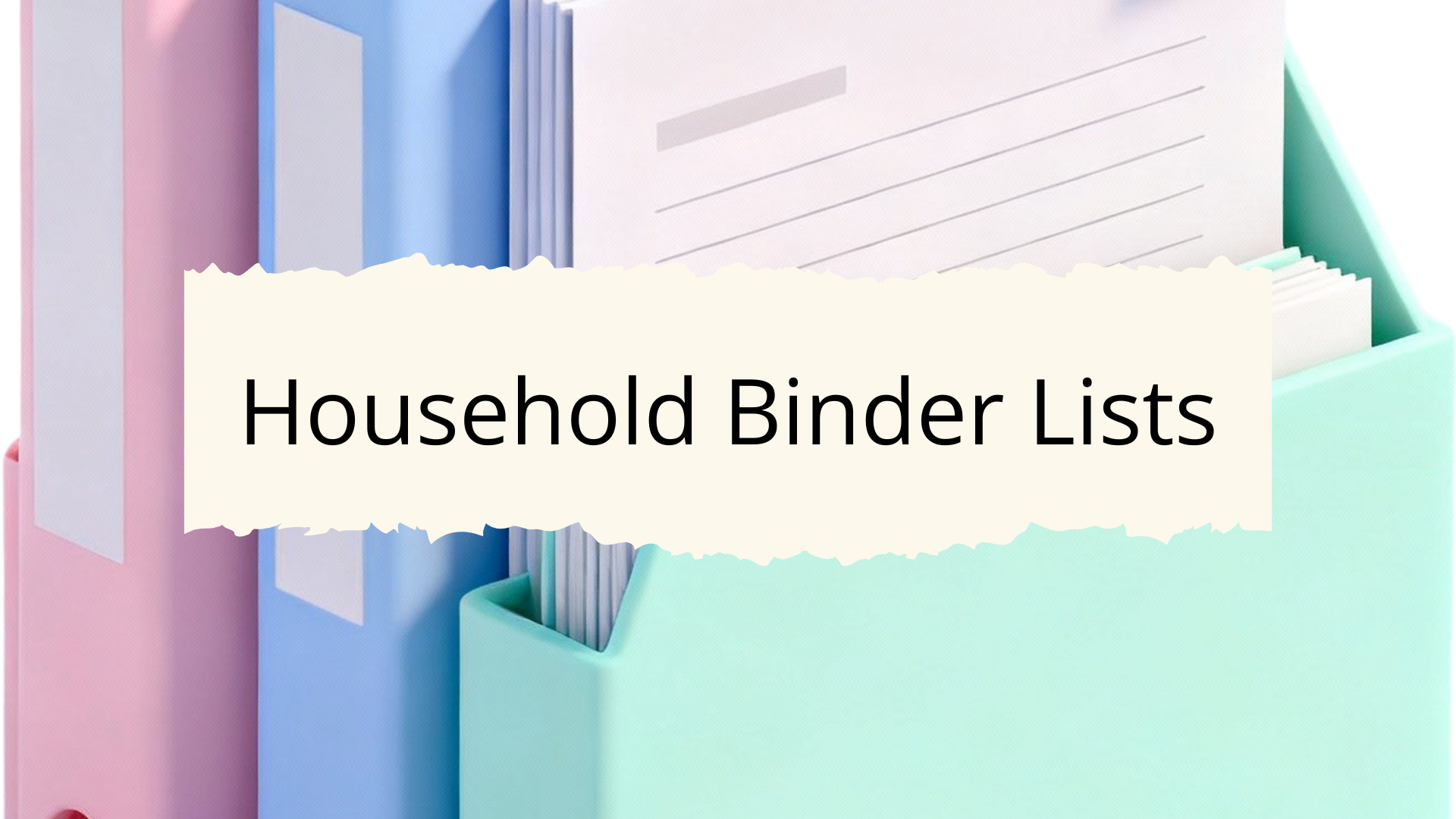
A household binder works best when it’s boring, predictable, and easy to update. It’s not meant to be a memory book or a life archive; it’s simply a central place to store the lists you don’t want to keep rebuilding in your head.
This post lays out the core lists that typically live inside a household binder.
Not every household will need every list, but these are the most common categories people rely on over time.
If your goal is to offload routine thinking, reduce repeated searching, and keep everyday information in one place, this is the baseline setup.
What a Household Binder Is For
A household binder is a physical reference system. It holds lists and information that are:
- used repeatedly
- updated occasionally
- annoying to recreate from scratch
- helpful for more than one person
Most people use a simple ring binder with dividers, though folders or clip systems work just as well. The format matters less than the function: everything is findable, written down, and kept together.
The lists below are grouped by purpose rather than by how often they’re used. That makes it easier to adapt the binder to your own routines.
Household Information Lists
These lists form the “core details” section of a household binder. They don’t change often, but when you need them, you usually need them quickly.
Common lists include:
- Household contact list (names, numbers, emails)
- Emergency contacts
- Utility providers and account numbers
- Internet, cable, and phone details
- Alarm system or security information
- Wi-Fi network names and passwords
- Home address details (including directions if relevant)
These lists are often printed once and updated only when something changes. Many people keep this section right at the front of the binder.
Home Maintenance & Repairs Lists
This section tracks the practical upkeep of the home. It’s especially useful for remembering what’s been done and what still needs attention.
Typical lists include:
- Regular maintenance schedule (filters, servicing, checks)
- Appliance purchase dates and warranties
- Repair history log
- Contractor and service provider contacts
- DIY projects list
- Seasonal maintenance checklist
Some people separate “completed” and “upcoming” tasks, while others keep a single running list and add dates. Either approach works as long as it’s consistent.
Cleaning & Household Routines Lists
Cleaning lists are one of the most common uses for a household binder. They reduce decision-making and make it easier to divide tasks if more than one person is involved.
Common list types:
- Daily cleaning checklist
- Weekly cleaning routine
- Monthly or seasonal deep-clean list
- Room-by-room cleaning tasks
- Supply restock checklist
These lists are often laminated or kept in plastic sleeves so they can be reused. Some households keep multiple versions depending on how detailed they want the system to be.
Meal Planning & Food Lists
Food-related lists are usually some of the most frequently referenced pages in a household binder. They save time and reduce repeated planning.
Popular inclusions:
- Master grocery list
- Regular meal ideas list
- Weekly meal planning template
- Pantry inventory
- Freezer contents list
- Favourite recipes index
Not everyone keeps full recipes in the binder. Many people simply list meal ideas and store recipes elsewhere. The binder’s role is to support planning, not replace cookbooks.
Family, School & Schedule Lists
For households with shared schedules, this section helps keep recurring information visible and organised.
Common lists include:
- Weekly schedule overview
- School term dates
- After-school activities list
- Pickup and drop-off responsibilities
- Important dates to remember
- Babysitter or caregiver information
Some of these lists are temporary and rotate out regularly. Others stay the same year after year and only need minor updates.
Financial & Admin Lists
This section focuses on tracking rather than budgeting. The goal is to have a clear overview of what exists, not to manage finances in detail.
Typical lists:
- Bills and due dates
- Subscription services
- Insurance policies overview
- Account reference list
- Annual admin checklist
- Document locations list
Many people find it helpful to include a note about where original documents are stored, especially if they’re not kept in the binder itself.
Health & Medical Lists
Health lists don’t need to be detailed to be useful. Even basic reference information can save time later.
Common examples:
- Doctors and healthcare providers
- Medications list
- Appointment tracking log
- Insurance details
- Emergency medical information
This section is usually kept simple and updated as needed rather than on a fixed schedule.
Pets & Animal Care Lists
For households with pets, a small dedicated section keeps routine care information in one place.
Common lists include:
- Feeding schedules
- Vet contact details
- Medication and treatment tracking
- Grooming or maintenance routines
- Boarding or sitter information
Even one or two pages here can be useful, especially if someone else occasionally helps with care.
Reference & “Nice to Have” Lists
Most household binders end up with a section for lists that don’t fit neatly elsewhere but are still useful to keep.
Examples include:
- Gift ideas list
- Home inventory list
- Travel packing basics
- Project planning pages
- Notes for future purchases
This section tends to evolve over time. It’s fine if it feels slightly messy; that’s usually a sign the binder is being used.
How Often These Lists Are Updated
Not every list needs regular attention. In most households:
- Core information lists are updated rarely
- Routine lists are reviewed weekly or monthly
- Planning lists change frequently
- Reference lists are updated as needed
A quick quarterly check is usually enough to keep the binder current.
Keeping the Binder Practical
A household binder works best when it stays simple. If a list stops being useful, remove it. If something is constantly missing, add it.
The goal isn’t completeness — it’s usefulness.
Once the key lists are in place, the binder becomes a quiet background tool: something you reach for when needed, then put back on the shelf.
That’s exactly what it’s meant to be.