
Bookmark this page for quick reference
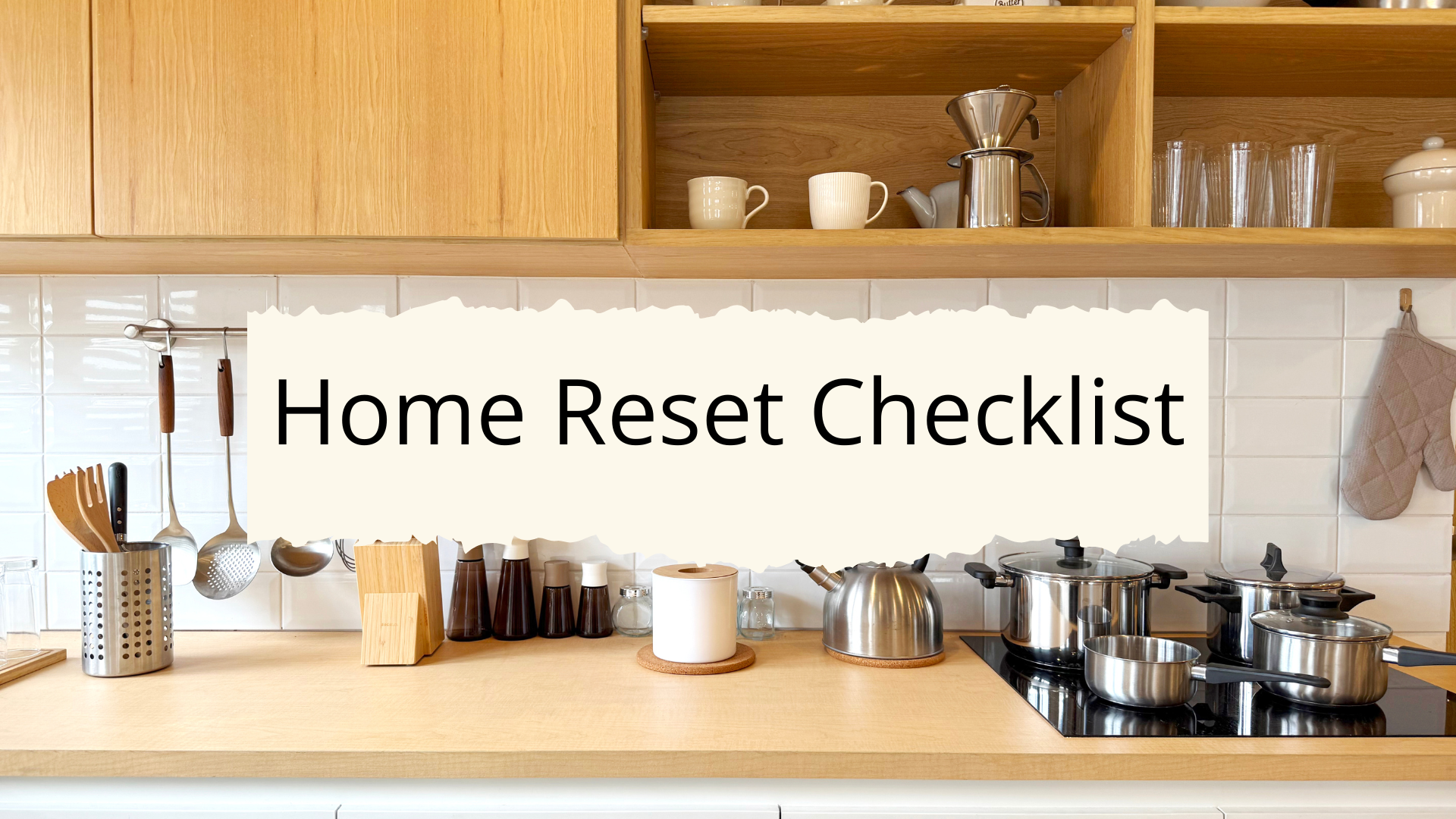
A home reset checklist is a fixed reference for getting the house back to a functional baseline.
It covers the tasks that tend to pile up between deeper cleaning sessions and keeps the reset process consistent each time.
This is the list you return to on a regular basis, and not just a one-time project, but a repeatable routine.
What This List Is For:
This checklist covers the recurring reset tasks that apply across the whole house, regardless of season. It’s designed to sit within a broader household organization system as a reusable reference.
📄 You can find a blank Home Reset Checklist inside the Home Management Binder so you can personalize it to your own needs.
Some households store this sheet in the Cleaning Section of their home binder to keep essential home details easy to reference.
What Is A Household Binder?
A household binder is a single reference point for the lists and information you use repeatedly to manage your home. For a full overview of how the system works, visit our household binder guide.
Below are the details typically included on a home reset checklist.
Information to Include in a Home Reset Checklist
Kitchen Reset
The kitchen accumulates clutter and buildup faster than most other rooms, so it benefits from a structured reset rather than ad hoc tidying.
A short kitchen reset list run regularly keeps the space functional without requiring a full deep clean each time.
- Clear and wipe all countertops
- Empty and reset the sink
- Wipe stovetop and surrounding surfaces
- Check and consolidate fridge contents
- Empty trash and replace liner
- Return misplaced items to correct storage
- Wipe down high-use appliances
- Sweep or vacuum floor, then mop if needed
These tasks take around ten to fifteen minutes when run consistently and prevent the kitchen from reaching a point where it needs a longer reset session.
Living Areas Reset
Shared living spaces tend to collect items from multiple household members throughout the week.
A consistent reset list for these rooms reduces the time spent making decisions about where things go.
- Return all items to their designated spots
- Straighten cushions and throws
- Clear surfaces: coffee table, side tables, shelves
- Dust visible surfaces
- Vacuum or sweep floors
- Empty any trash or recycling
- Check for anything that belongs in another room
Running this list at the end of the day or before the start of a new week keeps shared spaces functional without requiring a dedicated cleaning block.
Bedrooms Reset
Bedrooms are often a lower priority during a quick reset, but benefit from inclusion in a weekly or biweekly pass.
Keeping this list short makes it more likely to be completed consistently.
- Make beds or straighten bedding
- Return clothing to correct storage: hamper or wardrobe
- Clear bedside tables and dressers
- Remove dishes or items that don’t belong
- Vacuum or sweep floor
- Check under bed if clutter accumulates there
A short bedroom reset done a few times a week is more effective than a longer session done infrequently, since clutter in these spaces tends to accumulate gradually.
Bathrooms Reset
Bathrooms require consistent attention to stay functional.
A short, repeatable list keeps this manageable without turning it into a deep clean every time.
- Wipe sink, faucet, and counter
- Wipe mirror
- Clean toilet: seat, bowl, and base
- Wipe shower or tub surfaces
- Replace or straighten towels
- Restock soap, toilet paper, and any low supplies
- Empty trash
- Sweep or mop floor
Bathrooms maintained on a short, regular reset cycle rarely need more than ten minutes of attention and avoid the buildup that makes less frequent cleaning more time-consuming.
Entryway and Common Areas Reset
Entryways and transition spaces collect clutter quickly because they’re high-traffic zones without dedicated storage in many homes.
Including them in a reset list prevents buildup.
- Clear shoes, bags, and outerwear; return to storage or hooks
- Wipe down entry surfaces
- Check for mail, packages, or items waiting to be dealt with
- Sweep or vacuum floor
- Check that frequently used items are where they belong
Entryways that are reset consistently require less effort each time because items are returned to storage before they spread further into the house.
Admin and Household Systems Reset
A full home reset isn’t only physical.
Household paperwork, to-do items, and reference systems also benefit from a quick review pass.
Including this in a reset routine keeps administrative tasks from falling behind.
- Sort and file or discard any outstanding mail or paperwork
- Review the household to-do list and update it
- Check the calendar for upcoming tasks or appointments
- Restock any household supplies that are running low
- Note anything that needs follow-up action
Keeping this pass short and routine, rather than letting tasks accumulate into a larger admin session, is what makes it sustainable as part of a weekly reset.
If the paperwork side of the reset tends to build up, a dedicated annual paperwork organization system can help keep that category under control between weekly passes.
Practical Notes
This checklist works best as a weekly or biweekly routine, depending on household size and traffic.
Most households find that running through the full list takes between one and three hours; less once the habit is established and items are returned to their places more consistently throughout the week.
The list can be divided across multiple days if a single-session reset isn’t practical.
Some households assign specific zones to specific days rather than completing everything at once.
The admin section is optional during a quick reset, but it is worth including at least once a week to prevent paperwork and task lists from accumulating.
It takes less time when it’s done regularly.
Unlike seasonal reset checklists, such as a spring home reset checklist, this list doesn’t change with the time of year. It’s designed to stay consistent so the routine becomes automatic over time.
Closing
A home reset checklist works best as a fixed list that doesn’t need to be rebuilt each time.
Running through the same zones in the same order reduces decision-making and makes the process faster the more it’s repeated.
If you’d prefer a ready-made version, the printable Home Management Binder includes a formatted version of this page, organized and ready to print.