
Bookmark this page for quick reference
Although this is one of the less exciting trackers to set up, it can be surprisingly useful to have.
It’s not necessarily a list you refer to often, but it becomes valuable when you suddenly need warranty details for an appliance.
Problem: Warranty documents, receipts, and manuals are often stored in different places around the home. When an appliance needs repair, finding the right information can take time.
Solution: A simple appliance warranty tracker keeps the important details recorded in one place, making it much easier to locate warranty information when it’s needed.
📄 If you don’t have a binder set up yet, the Home Management Binder includes these tracker pages formatted and ready to print.
What This List Is For
An appliance warranty tracker provides a simple way to record warranty coverage for appliances throughout the home.
It acts as a quick reference when checking warranty status or locating service contact information.
Households often review this list when appliances require repairs, when warranty periods are close to expiring, or when organizing household records.
Many households store this list inside a household binder alongside other home records such as appliance manuals, home inventories, and maintenance schedules.
This list is commonly used to:
- Record warranty coverage details
- Track purchase dates and warranty expiration
- Store appliance serial numbers and model numbers
- Reference receipts and product documentation
- Maintain a clear household appliance record
By maintaining this list in one place, it becomes easier to see which appliances are still covered and which warranties have already expired.
The tracker should be updated whenever a new appliance is purchased or when warranty coverage changes.
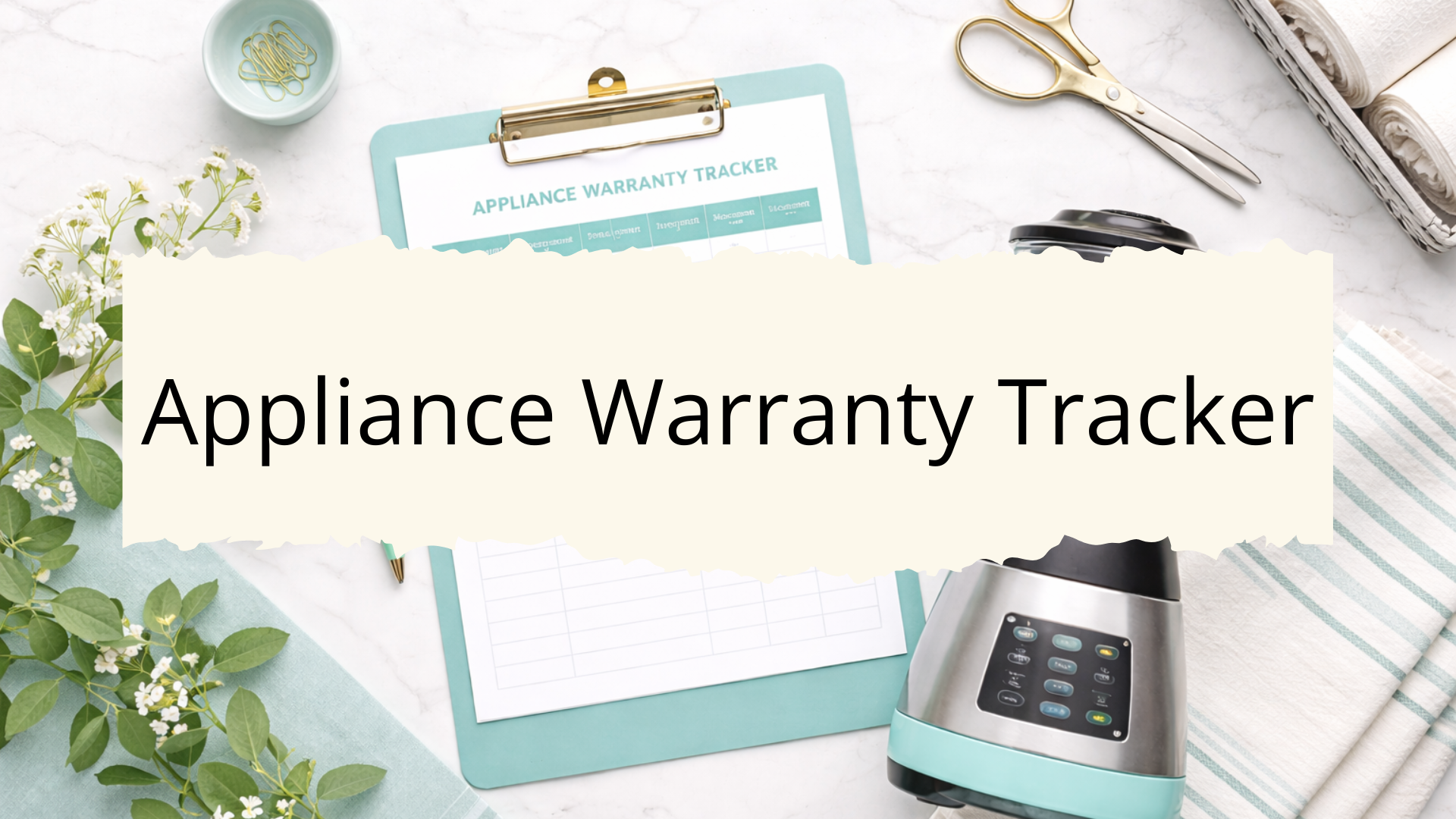
Appliance Warranty Tracker Template
The appliance warranty tracker records several pieces of information for each appliance.
Each field helps build a complete record that can be used for warranty claims, service requests, or general household documentation.
Many households keep one entry per appliance, so the list can grow gradually over time as appliances are replaced or added.
Appliance Name
The appliance name identifies which item the warranty information relates to.
Listing appliances clearly helps avoid confusion when several similar appliances exist in the home.
Examples of appliances that may be included on the tracker include:
- Refrigerator
- Washing machine
- Dryer
- Dishwasher
- Oven or range
- Microwave
- Freezer
- Water heater
- Air conditioner
- Vacuum cleaner
Recording the appliance name provides a simple reference point for the rest of the information recorded on the list.
Brand and Model Number
The manufacturer brand and appliance model number help identify the exact product that was purchased.
This information is often required when ordering replacement parts, scheduling repairs, or locating the correct product manual.
Model numbers are typically located in several places, including:
- On the appliance rating label
- Inside the appliance door or panel
- In the instruction manual
- On the purchase receipt
Adding the model number to the tracker ensures that this information can be found quickly without needing to inspect the appliance itself.
Serial Number
Most appliances also include a unique serial number assigned by the manufacturer. This number is used to identify the specific unit when registering warranties or submitting service requests.
Serial numbers are commonly found:
- On the appliance data plate
- Inside appliance doors or access panels
- On original packaging
- In product documentation
Recording the serial number in the warranty tracker can save time later, particularly if the appliance label is difficult to access.
Purchase Date
The purchase date is an important detail because it determines when the warranty period begins. Recording this date helps calculate how long the warranty remains valid.
Purchase dates can usually be found on the receipt or order confirmation from the retailer.
Keeping the purchase date on the tracker also provides a simple way to see how long an appliance has been in use within the household.
Warranty Length
Most appliances come with a warranty period provided by the manufacturer or retailer. This coverage length may vary depending on the product and brand.
Common warranty lengths include:
- 12 months
- 2 years
- 3 years
- 5 years
Some appliances may also include longer warranties on certain components, such as motors or compressors, therefore recording the warranty length helps clarify how long coverage lasts.
Warranty Expiration Date
Once the warranty length is known, the expiration date can be calculated and added to the tracker.
This field allows you to quickly check whether the appliance is still covered without needing to review the original warranty documentation.
Many households review these dates during annual home record updates to see which appliances are approaching the end of their warranty coverage.
Warranty Provider
Warranties are sometimes provided directly by the manufacturer, while others may come from retailers or third-party protection plans.
Examples of warranty providers include:
- Manufacturer warranty
- Retailer extended warranty
- Appliance protection plan
- Home warranty coverage
Recording the provider helps clarify who should be contacted if a warranty claim or repair request is needed.
Receipt Location
Warranty claims often require proof of purchase, so for this reason, it can be useful to note where the original receipt is stored.
Common receipt storage locations include:
- Home management binder receipt section
- Household filing cabinet
- Digital cloud storage folder
- Email purchase confirmation
Adding this information to the tracker makes it easier to locate the necessary documents when they are required.
Service Contact Information
Some appliance warranties include a dedicated support phone number or service website for repairs and claims.
Recording these details alongside the appliance entry keeps all service information together in one place.
Typical service information recorded may include:
- Manufacturer service phone number
- Warranty claim website
- Retailer customer service contact
This can help simplify the process if a repair appointment needs to be scheduled.
Notes
A notes section provides space to record additional details about the appliance warranty or service history.
Households often use this space to record information such as:
- Extended warranty purchase details
- Repair history
- Replacement parts installed
- Service technician visits
- Warranty claim reference numbers
Over time, these notes can create a simple maintenance history for the appliance.
Keeping Appliance Warranty Records Organized
Many households keep appliance documentation in several places, including instruction manuals, email confirmations, and paper receipts.
Without a central record, it can take time to locate the correct warranty information.
An appliance warranty tracker helps simplify this process by storing the key details on a single list page.
When placed inside a home management binder, the tracker becomes part of a larger household record system.
The list can be updated whenever a new appliance is purchased or when warranty coverage changes.
Over time, maintaining this list creates a clear reference for appliance purchases, warranty coverage, and repair history, helping keep household records organized and easy to access.