
Bookmark this page for quick reference
An after-school chores checklist is one of the simplest ways to define what kids are responsible for each day without repeating the same instructions every afternoon.
It works as a posted reference, something kids can check themselves, and it takes the follow-up off the parent’s plate once the routine is established.
What This List Is For:
This is a reference list of the chores and tasks kids can be assigned to complete after school, organized by type and roughly by age range. It covers daily responsibilities that belong to the child.
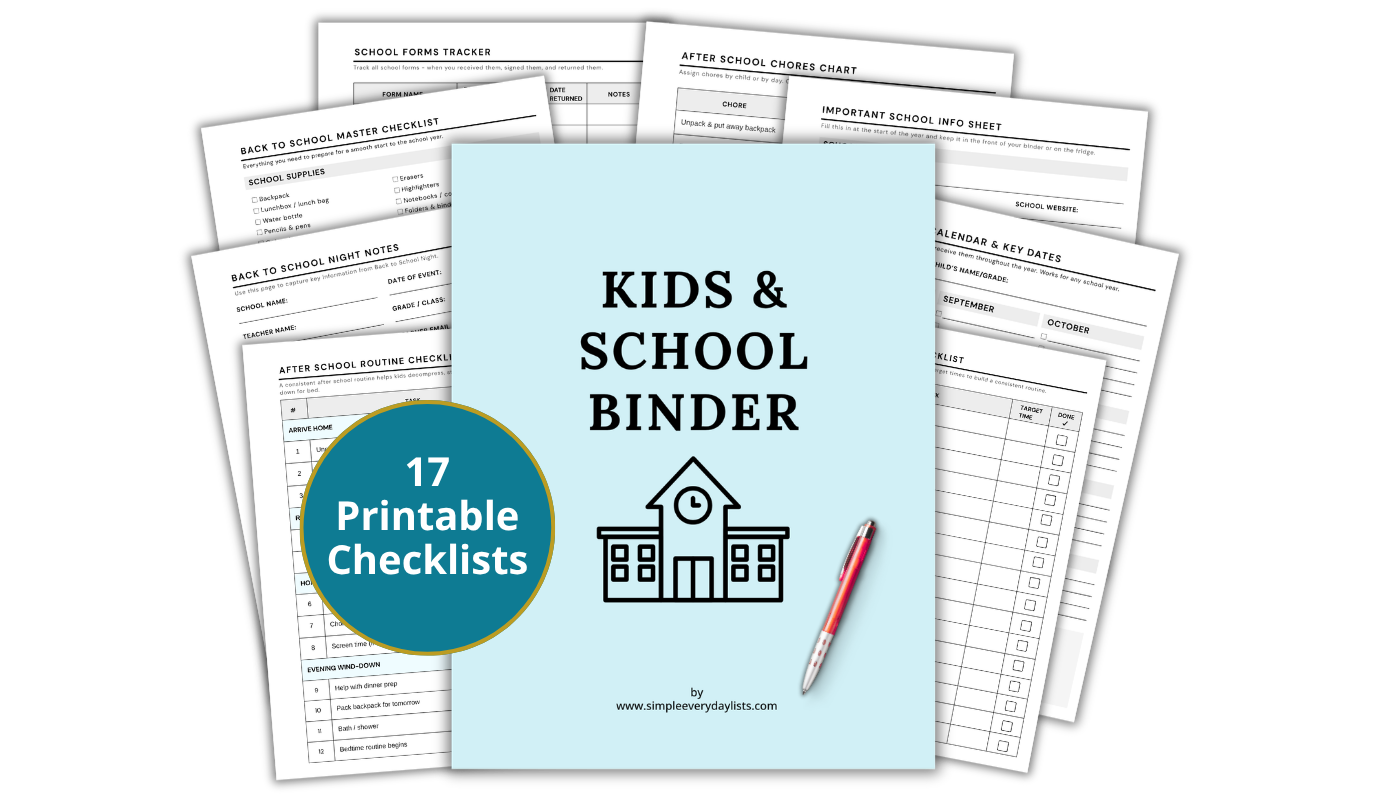
📄 A formatted, print-ready version of this chores checklist is included in the Kids & School Binder.
Keeping school-related lists in one place makes it easier to find what you need and reuse the same checklists each year without starting from scratch. This includes preparation lists, routine trackers, forms checklists, and event lists that come around on a predictable schedule.
For a full overview of what’s covered, visit our school checklists for parents guide.
Below are the tasks typically included on an after-school chores checklist, organized by category.
Tasks to Include on an After-School Chores Checklist
Arrival Home Tasks
These are the first things kids do when they walk in the door. Keeping arrival tasks short and consistent makes them easier to build into a habit.
- Hang up backpack in its designated spot
- Put shoes away
- Wash hands
- Bring lunchbox to the kitchen counter or sink
Even young kids can manage a short arrival routine. Four items or fewer works best for elementary-age children.
Bag and Paperwork Tasks
This is where the parent-side and kid-side checklists overlap slightly.
Kids who are old enough can handle parts of the unload and repack process themselves.
- Empty lunchbox and leave it for washing
- Pull all papers from folders and leave them on the counter for parent review
- Return signed forms or permission slips to the front pocket of the bag
- Repack the bag with tomorrow’s supplies if the evening allows
For middle schoolers and older, the full bag reset can become a daily independent task with minimal parent involvement.
Homework
Homework is one of the more consistent daily responsibilities, and it helps to include it explicitly on the chores list so kids see it as a standard expectation rather than a separate negotiation.
- Start homework within a set window after getting home (or after a short break, depending on your household’s preference)
- Complete all assigned work before screen time or activities
- Leave completed work visible or returned to the bag for parent review
The specific timing and location of homework varies widely by family, so this section of the checklist is worth customizing before posting it.
Want a Ready-Made Version?
The Kids & School Binder consists of 17 checklists and trackers to help you plan, manage and organize the whole school year.
Learn more about the binder...Household Chores by Age Group
After school is a practical time to assign household responsibilities that kids can complete independently. The right chores depend on the child’s age and what works logistically in your home.
Ages 5–7
- Clear and wipe their spot at the table after snack
- Put away personal items left out from the morning
- Feed a pet (if applicable)
- Help set the table before dinner
Ages 8–11
- Unload or reload the dishwasher
- Take out trash or recycling if collection is the next morning
- Sweep or vacuum a room
- Wipe down kitchen counters after snack
Ages 12 and up
- Start or switch laundry
- Prepare a simple part of dinner (cutting, measuring, setting out ingredients)
- Clean a bathroom
- Manage their own laundry from start to folded
These are reference starting points, not rigid assignments.
Most families adjust these based on which chores fit naturally into the afternoon timeline and which kids are most reliable with which tasks.
Evening Prep Tasks
These tasks sit at the end of the after-school window and set up the next morning. Including them on the chores checklist means they happen consistently rather than in a last-minute scramble.
- Lay out tomorrow’s clothes
- Confirm the bag is packed and by the door
- Check whether anything needs to go back to school the next day
- Complete any reading or studying due the following morning
For families who do these tasks before bed rather than the afternoon, this section still belongs on the checklist; it just gets positioned later in the posted routine.
Practical Notes
An after school chores checklist works best when it is posted somewhere visible – on the fridge, inside a cabinet door, or laminated and kept near the drop zone.
A single shared list works for households where kids have overlapping responsibilities. Separate lists per child make more sense when chores vary significantly by age or when one child needs more scaffolding than another.
The list should be reviewed and adjusted at the start of each school year.
What was manageable for a seven-year-old may not be appropriately challenging for a nine-year-old, and the timing of after-school activities tends to shift the available window.
Once the routine is established, the checklist functions as a silent prompt rather than something that needs daily enforcement. That transition typically happens within a few weeks of consistent use.
A clear, posted after school chores checklist removes the need for repeated reminders and puts day-to-day responsibility where it belongs – with the child. The list itself is a simple tool: a short daily reference that makes expectations visible and consistent.
If you’d prefer a ready-made version, the printable Kids and School Binder includes a formatted version of this page, organized and ready to print.
Ready to set up the full system?
The Kids & School Binder includes 17 formatted, print-ready checklists covering the whole of the school year - organized and ready to use.
Learn more about the Kids & School Binder