
Bookmark this page for quick reference
This page organizes every checklist, guide, and reference list related to building and maintaining a complete household binder system.
What Is a Household Binder?
A household binder is a centralized home management system designed to store essential documents, recurring reference lists, and administrative records in one structured location.
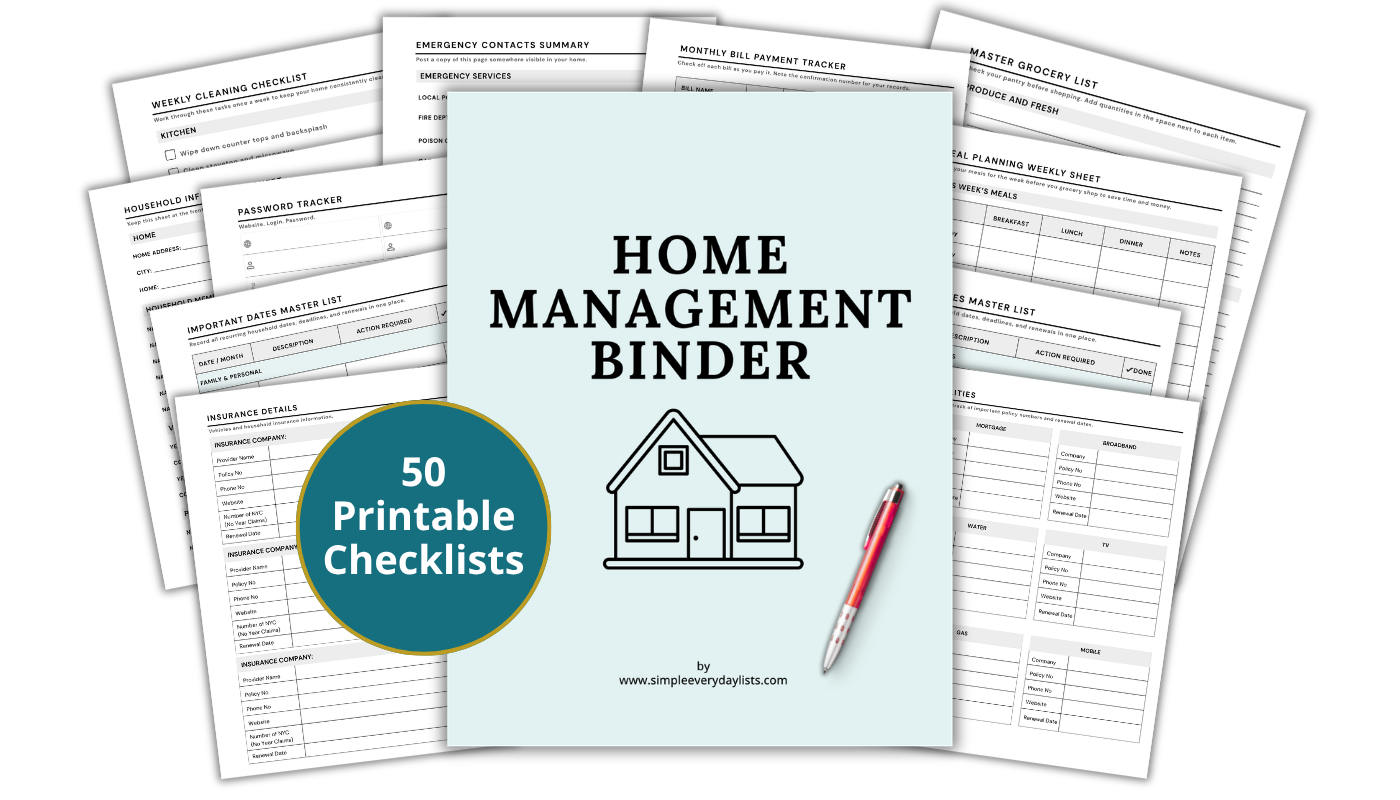
If you would like a structured place to keep all of your home records, the Home Management Binder brings every log, checklist, and record page together in one printable binder.
It functions as a practical control center for household information.
Instead of searching through filing cabinets, drawers, email inboxes, and digital folders, a household binder keeps essential information in one location.
Documents and reference lists are organized into clearly labeled sections that are easy to access and update.
A well-structured home management binder typically includes:
- Home and property records
- Financial documentation
- Family and medical information
- Emergency reference details
- Administrative tracking pages
- Maintenance logs
This page serves as the master index for building, organizing, and maintaining a complete household binder.
Who Maintains a Household Binder?
In most households, one person updates and maintains the binder.
However, it should be structured so that any adult household member can quickly locate information.
For that reason, clarity matters more than decoration. Sections should be labeled clearly, arranged logically, and reviewed on a consistent schedule.
The goal is usability, not aesthetics.
Why Use a Household Binder Instead of Digital Storage?
Digital files are useful, but a household binder offers advantages in certain situations:
- Immediate access during emergencies
- Centralized physical reference
- No password or device dependency
- Easier annual review and updates
- Clear separation of household documentation from everyday paperwork
Some households use both systems: digital backups paired with a physical reference binder.
This hub focuses on the structured paper-based system, though many lists can be adapted digitally if preferred.
What This Household Binder System Covers
This page organizes every binder-related guide and checklist published on this site.
Want a Ready-Made Version?
The Home Management Binder is a 50-page printable system covering every area of your household — bills, contacts, seasonal tasks, and more. Print once, use for years.
Learn more about the binder...It is structured by section so you can:
- Build a binder from scratch
- Add missing sections
- Review existing pages
- Expand gradually over time
As new binder-related posts are published, they will be added to the appropriate sections below.
Getting Started With a Household Binder
If you are creating your binder for the first time, begin with these foundational guides:
- Household Binder Setup Checklist
- Household Binder Ideas: Different Ways to Set Up Your System
- Important Documents To Keep in a Household Binder
- 50 Essential Lists to Keep in a Household Binder
- How To Maintain a Household Binder (Review Process)
- How to Use a Household Binder on a Day-to-Day Basis
These posts cover structure, section planning, and setup decisions before you begin filling in detailed pages.
Core Sections of a Household Binder
Most household binders are organized into consistent sections. Each section below links to detailed checklists and printable-ready reference lists.
1. Home & Property Records
This section stores documentation related to your home, property, and major assets.
It may include:
- Important Contacts Master List
- Household Documents Checklist for Home Records
- Home Inventory Checklist for Insurance
- Appliance Serial Number Log
- Appliance Warranty Tracker
- Home Warranty Information Checklist
- Home Repair History Log
- Home Maintenance Checklist
- Utility Account Information List
- Mortgage & Loan Information Tracker
- Rental Property Document Checklist
- Homeowners Association (HOA) Information List
These pages create a centralized reference area for property-related documentation and long-term recordkeeping.
2. Financial Documentation (Binder Section)
This section is strictly for record-keeping – not for active budgeting systems.
Typical pages include:
- Financial Documents Organizer Checklist
- Tax Preparation Document Checklist
- Bill Payment Record Sheet for Binder
- Annual Financial Records Archive Checklist
- Subscription Renewal Checklist
This section supports renewals, tax preparation, and document archiving.
(Full budgeting systems and tracking tools are covered separately under Household Money Management.)
3. Family & Personal Records
This section centralizes important information for household members.
It may include:
- Medical Information Organizer List
- School Information & Contacts List
- Childcare Information Checklist
- Pet Records Checklist
- Estate Planning Documents Checklist
These lists ensure critical information is stored consistently and can be updated annually.
4. Emergency & Quick-Access Information
A clearly labeled emergency section improves usability.
Common pages include:
- Family Emergency Binder Checklist
- Important Contacts Master List
- Household Service Providers Contact List
- Important Dates Master List (Renewals, Expirations, Deadlines)
- Digital Accounts Inventory Checklist
- Password Tracking Sheet for Home Accounts
This section is structured for fast retrieval rather than long-term archiving.
5. Home Organization & Cleaning Lists
This section supports the day-to-day systems used to keep the home organized, maintained, and manageable.
It may include:
- House Cleaning Checklist
- Daily Cleaning Checklist
- Weekly Cleaning Schedule
- Deep Cleaning Checklist
- Home Organization Checklist
- Decluttering Checklist
- Seasonal Home Maintenance Checklist
- Household Inventory Checklist
- Donation & Declutter Tracking List
These lists help organize recurring household tasks and create consistent routines that are easier to maintain throughout the year.
Maintaining and Updating Your Household Binder
A household binder is not a one-time setup; it requires a routine review to remain accurate.
Most households benefit from:
- A quarterly binder review
- An annual archive and reset
- Updating pages after major life changes
- Removing outdated records
- Replacing filled tracking sheets
Guides that support maintenance include:
Regular updates ensure your binder remains functional and reliable.
Expanding Your Household Binder System
As household responsibilities increase, your binder may expand to include:
- Moving house documentation
- Renovation and home improvement logs
- Project tracking (any kind)
- Vehicle maintenance records
- Annual planning summaries
- Long-term project documentation
This system is designed to grow gradually.
You do not need every section at once; simply add pages as needed and review annually.
Optional Printable Version
If you prefer a ready-made format, a complete Home Management Binder with structured printable templates is available.
It includes formatted versions of the core sections outlined above, organized for immediate use.
→ View the Home Management Binder here.
Household Binder Supplies
A household binder system requires only a few basic supplies.
The goal is to keep documents and reference lists organized in a format that is easy to update over time.
Common supplies include:
- 2–3 Inch Binder: Large enough to hold multiple sections as the system grows.
- Tabbed Dividers: Used to separate major binder categories.
- Sheet Protectors: Useful for storing original documents or pages that are referenced frequently.
- Printable Checklist Pages: Structured lists used to record household information.
- Pocket Folders: Helpful for temporary paperwork that has not yet been filed.
- Binder Spine and Cover Labels: Makes the binder easy to identify and retrieve quickly.
The good news is that most households already own some of these supplies, but if not, the binder system can be expanded gradually as new sections and pages are added.
If you would like a ready-made system for keeping all of your home records organized, the Home Management Binder brings everything together in one structured, printable binder.
In Closing
A household binder works best when it evolves gradually. Start with the core sections that apply to your household and add additional pages over time.
The guides and checklists on this page are designed to help you build a practical home management system that remains easy to maintain year after year.
Ongoing Updates
This page functions as the central index for all household binder resources on this site.
It will continue to expand as new binder checklists and guides are published.
Ready to set up the full system?
The Home Management Binder includes 50 formatted, print-ready checklists covering household finances, contacts, seasonal tasks, and everything in between - organized and ready to use.
Learn more about the Home Management Binder