
Bookmark this page for quick reference
A mortgage and loan information sheet is a single reference page that captures the key account details for every debt obligation tied to your household.
When you need a loan servicer number, a payoff balance, or a policy number fast, this page means you are not logging into multiple accounts or searching through old statements to find it.
What This List Is For:
This is a reference list template to help you record the account details, contact information, and key terms for every mortgage and loan your household carries.
📄 A formatted, print-ready version of this sheet is included in the Home Management Binder.
Many households keep this sheet in the Finance Section of their home management binder so the most important details are easy to find when needed.
What Is A Household Binder?
A household binder is a single reference point for the lists and information you use repeatedly to manage your home. For a full overview of how the system works, visit our household binder guide.
This post covers what to record for a primary mortgage, a home equity loan or HELOC, and any vehicle or personal loans tied to the household.
It also includes guidance on how to organize multiple accounts and when to update the sheet.
What to Record for Your Mortgage
Your primary mortgage typically carries more detail than any other loan account in the household.
Most of the information below can be pulled from your most recent mortgage statement or your loan servicer’s online portal in a single session.
Recording it once and keeping it current means account numbers, payment amounts, and servicer contacts are immediately available without logging in each time you need them.
- Lender or loan servicer name
- Loan account number
- Servicer phone number and website
- Servicer mailing address
- Original loan amount
- Current interest rate
- Loan type — fixed rate or adjustable rate (ARM)
- Loan term (for example, 30-year or 15-year)
- Loan origination date and maturity date
- Monthly payment amount — principal and interest
- Whether taxes and insurance are escrowed
- Total monthly payment, including escrow
- Property tax account number (if escrowed)
- Homeowners insurance provider and policy number (if escrowed)
- PMI status and estimated removal date if applicable
If your loan has been transferred to a new servicer since origination – which is common – record the current servicer’s information rather than the original lender’s.
The Home Management Binder includes a blank Mortgage & Loan Info page if you prefer a structured version ready to print and fill in.
What to Record for a Home Equity Loan or HELOC
Home equity products carry their own terms and deserve a separate block on this sheet, even if they are held with the same lender as your primary mortgage.
A home equity loan has fixed payments like a second mortgage.
A HELOC operates as a revolving line of credit with a draw period followed by a repayment period. The fields below apply to both, with a few additions specific to HELOCs.
Want a Ready-Made Version?
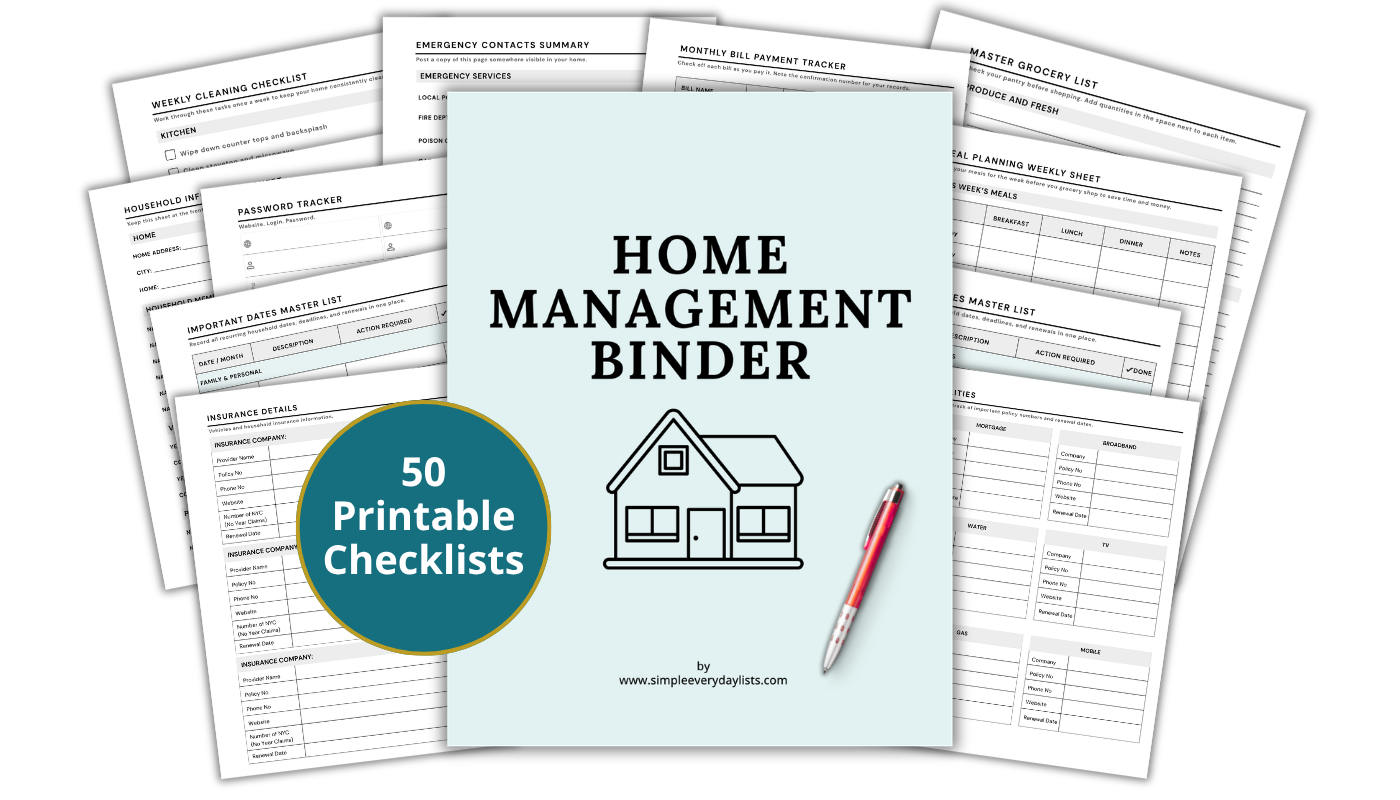
The Home Management Binder is a 50-page printable system covering every area of your household — bills, contacts, seasonal tasks, and more. Print once, use for years.
Learn more about the binder...- Lender name and account number
- Customer service phone number and website
- Original loan amount or credit limit
- Current balance with date recorded
- Interest rate and whether it is fixed or variable
- Monthly payment amount
- Draw period end date (HELOC)
- Repayment period start and end date (HELOC)
- Payment amount during draw period versus repayment period (HELOC)
- Payoff date or estimated payoff date
- Automatic payment status
What to Record for Vehicle and Personal Loans
Vehicle loans and personal loans used for household purposes – a major home repair, a large appliance, a medical bill – are worth including in this section.
These accounts are easy to manage loosely until a payoff amount is needed quickly or a payment detail needs to be confirmed.
Use the same core fields for each account, with a few additions relevant to these loan types.
- Lender name and account number
- Customer service phone number and website
- Loan type – auto, personal, or installment
- Original loan amount
- Current balance with date recorded
- Interest rate
- Monthly payment amount
- Payoff date
- Collateral if applicable – for vehicle loans, include year, make, model, and VIN
- Automatic payment status
- Prepayment penalty – yes, no, or unknown
- Any active deferment or modified payment arrangement
- Co-signer name if applicable
How to Organize Multiple Loan Accounts
If your household carries several loan accounts, there are two practical layout options for this section of your binder.
A single summary sheet with a row or block per account keeps everything visible on one page and works well when accounts are relatively simple.
A separate sheet per loan allows more room for detail and is easier to update when terms change; this tends to work better for mortgages and HELOCs.
Either approach is workable, and the deciding factor is usually the number of accounts and how much detail each one requires.
Across whichever format you use, include these additional fields:
- Date the sheet was last updated
- A notes field for account-specific details, such as grace period length, ARM rate adjustment schedule, or an escalation contact
- A status note for any account that is paid off, refinanced, or closed
Closed accounts can be removed from the active sheet or moved to a separate archive page once a loan is settled.
Practical Notes
This sheet does not require frequent updates.
Reviewing it once or twice a year is sufficient for most households, along with updating it any time a loan is paid off, refinanced, or transferred to a new servicer.
If you refinance your mortgage, replace the old sheet with a clean one rather than editing over existing figures.
The current balance field will become outdated the fastest, so either record it with a clear date so you know how recent the figure is, or leave it blank and use the sheet as a terms-and-contacts reference only.
Both are reasonable depending on how you use the page.
If another adult in the household needs to manage these accounts in an emergency, this is one of the more critical reference pages in your binder.
Account numbers and servicer contact details are typically the first things needed when someone unfamiliar with the accounts has to act.
Make sure what you have recorded is sufficient for that scenario.
Closing
A mortgage and loan information sheet doesn’t need to be complex; it just needs to be accurate and detailed enough to be genuinely useful when you need it.
Servicer contacts, account numbers, interest rates, payment amounts, and payoff dates form the core of it. The rest is supporting detail based on what your household actually carries.
If you’d prefer a ready-made version, the printable Home Management Binder includes a formatted version of this page, organized and ready to print.
Ready to set up the full system?
The Home Management Binder includes 50 formatted, print-ready checklists covering household finances, contacts, seasonal tasks, and everything in between - organized and ready to use.
Learn more about the Home Management Binder