
Bookmark this page for quick reference
Keeping important personal documents organized makes everyday administration easier and ensures records are easy to locate when needed.
A personal records storage checklist helps track where key documents are stored and what information is included in each file.
What This List Is For:
This list works as a reference for organizing and tracking important personal documents in one structured system.
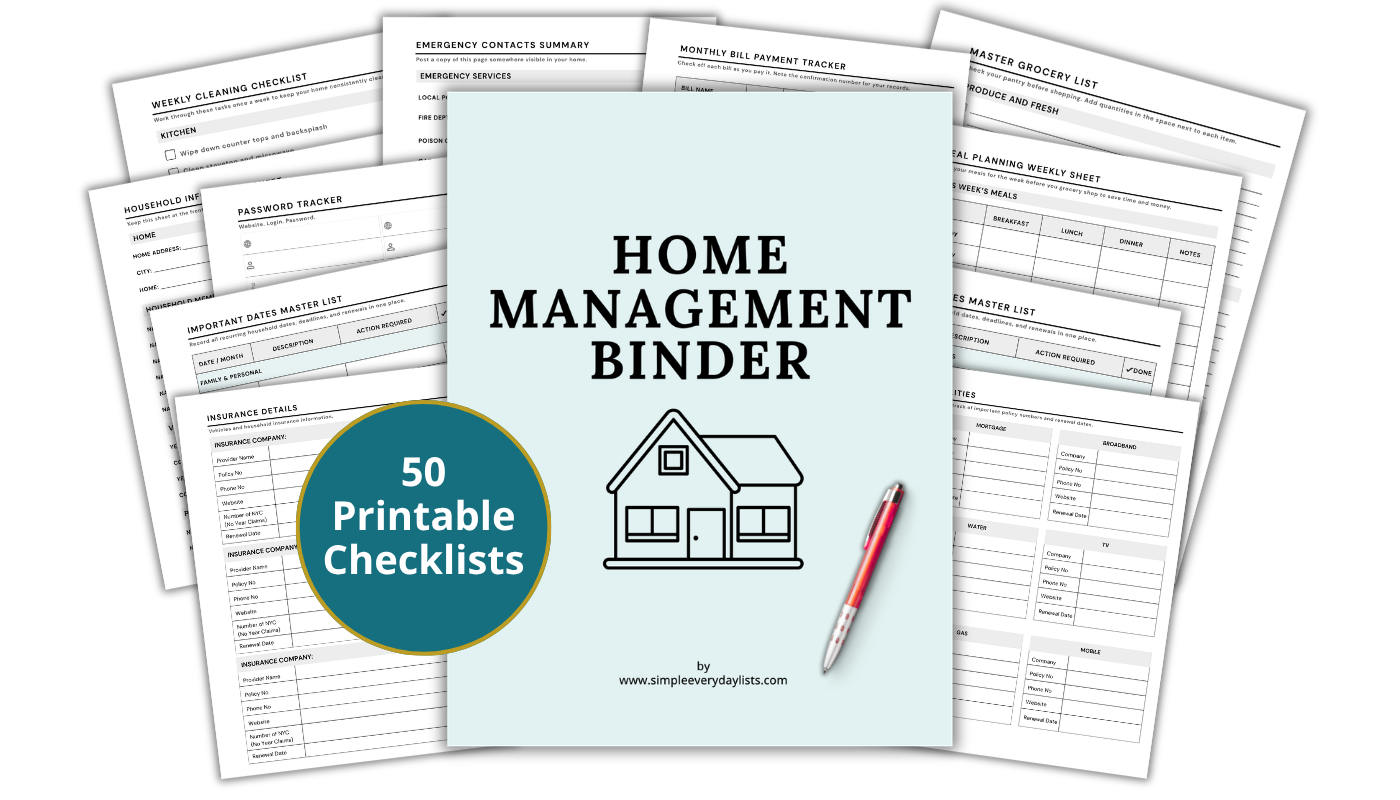
📄 You can find a blank Personal Records Storage Checklist inside the Home Management Binder, so you can personalize it to your own needs.
Many households store this sheet in the home admin section of their binder to keep essential home admin details easy to reference.
What Is A Household Binder?
A household binder is a single reference point for the lists and information you use repeatedly to manage your home. For a full overview of how the system works, visit our household binder guide.
Below are the details typically included on this type of personal records list.
Information to Include in a Personal Records Storage Checklist
Identification Documents
Identification documents are among the most frequently required records in a household filing system.
This section records the types of identification stored and where they are kept.
Tracking these documents helps ensure passports, identification cards, and other official records are stored securely but remain easy to locate when required.
Typical details recorded include:
- Passport holder name
- Passport storage location
- Passport expiration date
- National ID or citizen card location
- Driver’s licence holder name
- Driver’s licence expiration date
Keeping identification records clearly listed simplifies document retrieval when completing official forms or applications.
Birth Certificates
Birth certificates are commonly required for legal processes, school registration, and government documentation.
Recording where these certificates are stored helps avoid searching through multiple files when they are needed.
Households often keep birth certificates in a secure file or document safe alongside other vital records.
Typical details recorded include:
Want a Ready-Made Version?
The Home Management Binder is a 50-page printable system covering every area of your household — bills, contacts, seasonal tasks, and more. Print once, use for years.
Learn more about the binder...- Full legal name on certificate
- Certificate holder (family member name)
- Certificate issue date
- Certificate number
- Storage location of the original document
- Location of certified copies
Listing birth certificate storage locations ensures these documents remain easy to access when required.
Marriage or Civil Partnership Records
Marriage and civil partnership documents may be needed for financial records, insurance policies, and legal documentation.
This section records where these documents are stored within the household system.
Many households store these records alongside other legal documents to keep family records grouped together.
Typical details recorded include:
- Certificate holder names
- Date of marriage or partnership
- Certificate number
- Issuing authority or registry office
- Storage location of the original certificate
- Location of certified copies
Recording these details helps keep family documentation organized and accessible.
Divorce or Legal Status Documents
Divorce decrees or legal status records are often stored with other personal legal documentation.
Recording these documents in the checklist ensures they are stored safely and easily located when needed.
These documents are sometimes required for financial or legal processes.
Typical details recorded include:
- Full names listed on the document
- Type of legal document
- Date issued
- Court or authority issuing the document
- Storage location of the original document
- Location of additional copies
Maintaining a record of these documents helps ensure important legal paperwork is properly filed.
Citizenship and Immigration Records
Citizenship and immigration documents may include naturalization certificates, residency permits, or immigration paperwork.
These documents are often required for travel, employment verification, or government records.
This section tracks where these documents are stored within the household filing system.
Typical details recorded include:
- Document holder name
- Type of citizenship or immigration document
- Certificate or document number
- Date issued
- Expiration date (if applicable)
- Storage location of the document
Keeping these records documented helps ensure they are easily accessible when required.
Adoption Records
Adoption documentation is typically stored alongside other vital family records.
These records may be required for legal identification, family documentation, or government records.
This checklist section records where these documents are kept.
Typical details recorded include:
- Adopted individual’s name
- Adoption certificate number
- Date of adoption order
- Issuing court or authority
- Storage location of original documents
- Location of certified copies
Documenting adoption records ensures these important records remain organized.
Military Service Records
For households with military service history, service records may include discharge papers, service certificates, and official documentation.
These records are often required for veteran services or historical records.
Tracking these records ensures they remain preserved and accessible.
Typical details recorded include:
- Service member name
- Branch of service
- Service dates
- Discharge document reference
- Location of original documents
- Location of additional records or copies
Listing these details helps maintain an organized archive of service documentation.
Name Change Documentation
Name change records may include legal name change certificates or supporting legal documentation.
These records are often required when updating identification, financial accounts, or government records.
This checklist section records where those documents are stored.
Typical details recorded include:
- Individual’s current legal name
- Previous name recorded on the document
- Name change certificate number
- Date issued
- Issuing authority
- Storage location of documentation
Recording name change documents helps keep identification records consistent.
Personal Legal Documents
Some personal records relate to legal identification or official documentation that does not fall into other categories.
These may include affidavits, declarations, or legal certificates.
This section tracks where these documents are stored within the home filing system.
Typical details recorded include:
- Document title or description
- An individual associated with the document
- Date issued
- Issuing authority
- Document reference number
- Storage location
Listing these records ensures all personal documentation is included in the household filing system.
Secure Storage Locations
A personal records checklist is also useful for tracking where different document types are physically stored.
Many households store documents in multiple secure locations such as safes, filing cabinets, or binders.
Recording these locations provides a quick reference for retrieving documents.
Typical details recorded include:
- Document safe location
- Filing cabinet drawer reference
- Home management binder section
- Fireproof box location
- Digital backup location
- Off-site storage location
Document storage tracking ensures important paperwork remains organized and protected.
Summary
Organizing personal documentation is an important part of maintaining a reliable household administration system.
A personal records storage checklist provides a simple reference for tracking where important documents are stored and ensuring nothing important is misplaced.
Keeping these details recorded helps households maintain consistent document organization and reduces the time spent searching for important paperwork when it is needed.
Many households include a Personal Records Storage Checklist as part of their broader household documentation system within the Home Management Binder, where important records and reference lists are kept together for everyday home administration.
Ready to set up the full system?
The Home Management Binder includes 50 formatted, print-ready checklists covering household finances, contacts, seasonal tasks, and everything in between - organized and ready to use.
Learn more about the Home Management Binder